Altman's $2B Conflict of Interest: OpenAI-Musk Trial Closes Today, Governance Crisis Exposed
TL;DR
Court filings show OpenAI CEO Sam Altman holds over $2B in personal stakes across nine companies that did business with OpenAI, $1.7B in Helion alone. Closing arguments begin today in the landmark Musk lawsuit that could reshape AI's most powerful company.
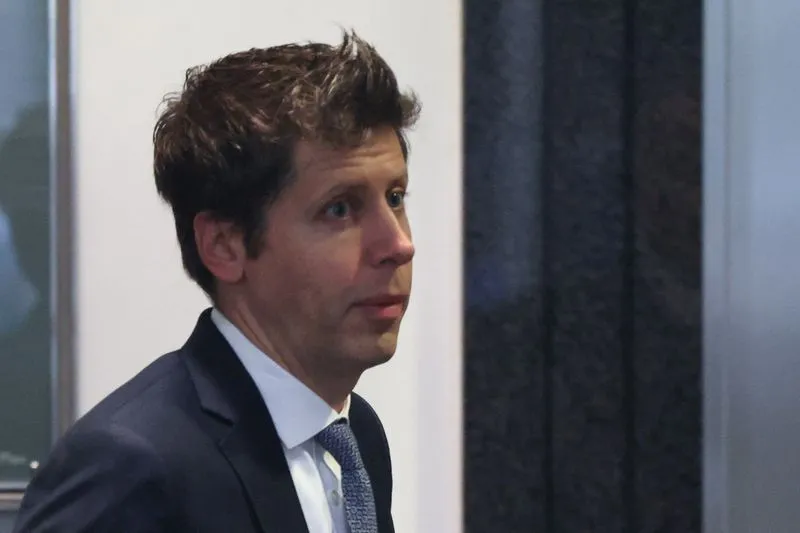
Closing arguments begin today, May 14, 2026, in the Musk v. Altman trial at the federal courthouse in Oakland, California.
The case has already produced one explosive revelation: court documents filed on May 13 show that OpenAI CEO Sam Altman holds personal stakes exceeding $2 billion in nine companies that have done business with OpenAI. The disclosure is forcing a reckoning with how the world’s most consequential AI company handles conflicts of interest at the top.
What the Court Documents Show
Musk’s lead attorney Steven Molo introduced a financial disclosure document listing Altman’s holdings as of December 31, 2025. The key positions:
- Helion Energy: $1.7 billion. The nuclear fusion startup signed a power purchase agreement with OpenAI in 2023 worth billions over multiple years.
- Stripe: $633 million. OpenAI relies on Stripe to process ChatGPT Plus subscription payments.
- Retro Biosciences: $258 million. An anti-aging pharmaceutical company with an OpenAI partnership.
- Reddit: undisclosed amount. Altman held Reddit equity when he led negotiations for a 2024 content licensing deal that gave OpenAI access to Reddit’s training data.
- Cerebras: $3.2 million. One of the vendors in OpenAI’s $10 billion compute procurement deal.
Nine companies across different industries. The common thread: all of them transacted with OpenAI while Altman stood to gain personally from their success.
According to reporting by US News and multiple outlets covering the trial, the disclosure came from Altman’s own court-submitted financial documents.
The Core Conflict of Interest Argument
Musk’s legal team frames the issue simply: the same person cannot represent a company’s interests in a negotiation while simultaneously holding a personal financial stake in the counterparty. Calling that a “risk of conflict” understates it. It is the conflict.
The Helion case is the sharpest example. OpenAI’s 2023 power purchase agreement with Helion committed to paying the startup billions for electricity. At the time of that negotiation, Altman held over $1 billion in Helion equity. Every dollar the deal added to Helion’s valuation translated into a larger personal fortune for OpenAI’s own CEO.
The Reddit case runs along the same logic. Altman personally spearheaded the 2024 content licensing agreement that let OpenAI train on Reddit’s data. He held Reddit shares at the time. Reddit went public later that year and the stock roughly doubled.
The scrutiny extends beyond the courtroom. The House Oversight and Government Reform Committee sent Altman a formal letter last Friday demanding an explanation of how OpenAI identifies and prevents conflicts of interest. Ten Republican state attorneys general have separately written to the SEC requesting a governance review before OpenAI proceeds with its anticipated public offering.
Altman’s Defense
Altman’s position has been consistent throughout his testimony: for every transaction involving a company where he held a stake, he recused himself from final decisions. He told the court: “The board would approve any final terms. I had other people in the room with me. This was a well-discussed standard corporate recusal.”
The argument is not without merit. Executive conflicts of interest are common in Silicon Valley, and recusal is the standard mechanism for managing them. The harder question, which the court proceedings have not fully answered, is whether the recusals actually happened, whether the board at the time had independent oversight capability, and whether disclosures were made proactively or only under litigation pressure.
Former OpenAI CTO Mira Murati, who testified earlier in the trial, accused Altman of creating internal “chaos.” That assessment from someone who led the technical development of GPT-4, DALL-E, and Sora carries weight.
What the Trial Is Actually About
Musk’s lawsuit alleges that Altman and co-founder Greg Brockman “stole a charity” by pivoting OpenAI from a nonprofit to a for-profit structure in 2019. Musk claims he invested $380 million based on the nonprofit mission, and is seeking $134 billion in damages plus the removal of Altman and Brockman from leadership.
Altman countered with a claim that drew significant attention: Musk, he testified, demanded 90 percent of OpenAI’s equity and full board control before departing in 2019. When OpenAI declined, Musk left and eventually founded xAI.
OpenAI characterizes the lawsuit as a competitive attack designed to slow down a company that xAI directly competes with.
Today’s closing arguments will not produce a verdict. That may take weeks. But whatever the judge decides, the trial has already changed the conversation around AI governance. The disclosures about Altman’s personal stakes are now part of the public record.
Why This Matters Beyond the Courtroom
OpenAI’s annualized revenue has crossed $25 billion. A planned IPO could value the company at over $1 trillion. At that scale, the governance mechanisms that worked for a scrappy nonprofit research lab are being tested against the expectations of public markets and congressional oversight.
The question raised by these proceedings is not unique to OpenAI. As AI companies grow into critical infrastructure, the standards for executive conflict disclosure need to keep pace. OpenAI is just the first to have that gap exposed in a federal courtroom.
If this was useful, subscribe to the newsletter for weekly AI PM insights and GenAI case studies.
Sources:
Related Articles
OpenAI Opens First Overseas Applied AI Lab in Singapore with $234M Commitment
OpenAI commits $234M to Singapore for its first overseas Applied AI Lab. IMDA updates its agentic AI governance framework the same day.
OpenAI Launches Dots: Ongoing Work Should Not Become a Growing Review Queue
OpenAI is rolling out dots to eligible paid users for work that continues between conversations. Read-only background research and limited memory controls make missed commitments and accumulated review work more useful tests than activity alone.