Google I/O 2026 Keynote: Gemini Intelligence Baked Into Android, Googlebook Aims to Replace Chromebooks
TL;DR
Google I/O 2026 keynote unveils Gemini Intelligence embedded at the Android OS layer, a new Googlebook laptop category, and Samsung XR glasses. Google bets on distribution, not model rankings.
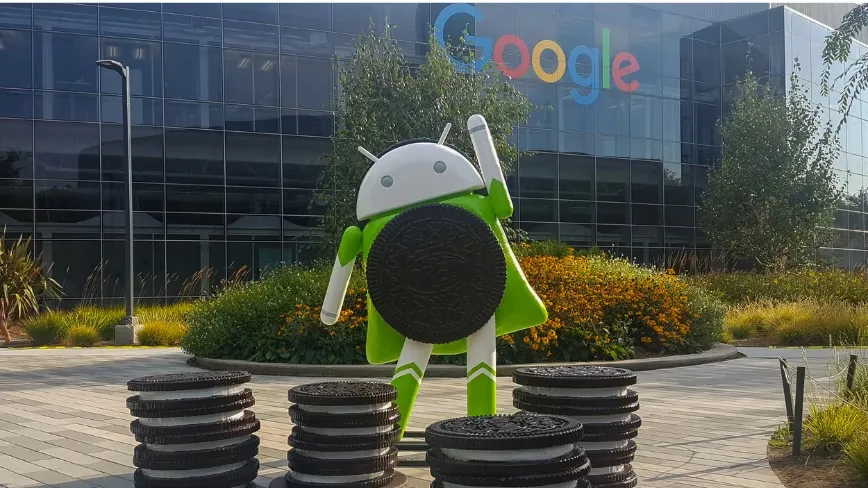
Google I/O 2026 opened today at Shoreline Amphitheatre in Mountain View. The main keynote began at 10 a.m. PT and delivered announcements across hardware, software, and AI. One thread ran through everything: moving Gemini out of a chat window and into the operating system itself.
That is the strategic choice Google made this year, and it is a different race from “who has the best model.”
Gemini Intelligence: Built Into Android 17, Not an App
Gemini Intelligence is the centerpiece of today’s keynote. It has no app icon. It is integrated directly into the Android 17 system layer, designed to read screen context and complete multi-step tasks across applications without requiring users to switch between them manually.
Concrete examples: it reads your calendar, books parking near a meeting location, assembles grocery lists from recipes and adds them to your notes app, and fills forms autonomously in Chrome. The auto-browse capability comes to Pro and Ultra subscribers starting late June.
Hardware requirement worth noting: Gemini Intelligence needs at least 12 GB of RAM and a recent flagship chip. Google has effectively created a two-tier Android ecosystem where AI features are gated behind flagship hardware.
Googlebook and Aluminium OS: Chromebook’s Replacement
Google announced a new product category called Googlebook, positioning it as a premium Android-powered laptop. Acer, ASUS, Dell, HP, and Lenovo will ship devices in fall 2026.
These run Aluminium OS, which is Android 17 rebuilt as a desktop operating system. It includes window management, an app dock, virtual desktops, desktop Chrome with extension support, and a feature called Magic Pointer that lets Gemini interact directly with on-screen elements.
The Chromebook brand was absent from today’s keynote. Googlebook appears to be its direct successor, bringing Android’s app ecosystem to laptops with Gemini as the embedded AI layer throughout.
Android XR Glasses: Samsung’s “Jinju” Is the Most Concrete
Android XR glasses were presented as a preview, but with more specific hardware details than prior leaks had offered.
Samsung Jinju carries a Snapdragon AR1 chip, a 12 MP camera, and weighs approximately 50 grams, roughly the weight of a standard pair of sunglasses. Other hardware partners include XREAL, Warby Parker, and Gentle Monster. All four plan to ship devices by end of 2026. The glasses run Gemini 2.5 Pro and support optional in-lens displays.
New Gemini Model: “Around GPT-5.5 Level”
Google announced a new Gemini model at the keynote. Exact versioning remains unclear across coverage, with analysts split between Gemini 3.5 and Gemini 4.0. On independent benchmarks, multiple sources describe it as performing “at roughly the same level as GPT-5.5,” meaningfully behind Anthropic’s Claude Mythos.
That is a consistent pattern now. MIT Technology Review noted the day before that Google holds third place in foundation model rankings, but reaches far more users than any pure-model company through Android and Workspace.
That is likely why today’s story was Gemini Intelligence, not benchmark scores.
What Else Was Announced
Gemini Omni is now confirmed. It generates and edits video directly inside the Gemini chat interface, with reportedly better audio quality than Veo 3.1 and embedded background music.
Google Health Coach is going public. It focuses on fitness and dietary advice while deliberately staying away from medical diagnosis, which positions it as more conservative than ChatGPT Health (launched January 2026).
Android 17 ships with over 4,000 redesigned 3D Noto emoji, an updated Find Hub with biometric security, and a wireless iPhone-to-Android transfer tool.
Rambler cleans up voice-dictated messages into coherent sentences. Create My Widget generates home screen widgets from natural language descriptions. Pause Point interrupts scrolling to surface relevant context at the right moment.
The Takeaway
Google’s bet today is not about being the strongest model. The bet is that distribution cannot be replicated quickly. Android runs on more than three billion active devices. Gemini Intelligence embedded at the OS layer, Googlebooks extending that into laptops, and XR glasses reaching wearables, all point to the same thesis.
OpenAI and Anthropic build better models for now. Building that kind of hardware and software distribution footprint takes years.
If this was useful, subscribe to the newsletter for weekly AI PM insights and GenAI case studies.
Further Reading
Related Articles
Google I/O 2026 Eve: Gemini Omni Leaked, Can Google Close the AI Gap?
Google I/O 2026 opens tomorrow. Leaked Gemini Omni promises unified text/image/video generation — but can it catch Claude Mythos scoring 93.9% on SWE-bench?
Google Unveils Gemini 4 Argon: Code Modernization Needs the Right Baseline
Gemini 4 Argon raises the output limit to 1M tokens, initially for trusted cyber defenders. Its libgav1 example shows iterative improvement of a Rust port, but the 2.7-fold speedup is not measured against the optimized C++ original.