Pope Leo XIV's First AI Encyclical 'Magnifica Humanitas': Human Dignity Must Set AI's Limits
TL;DR
Pope Leo XIV released his first AI-focused encyclical on May 25, presenting alongside Anthropic co-founder Christopher Olah. The document warns of AI-driven dehumanization and calls human dignity the fundamental criterion for evaluating AI development.
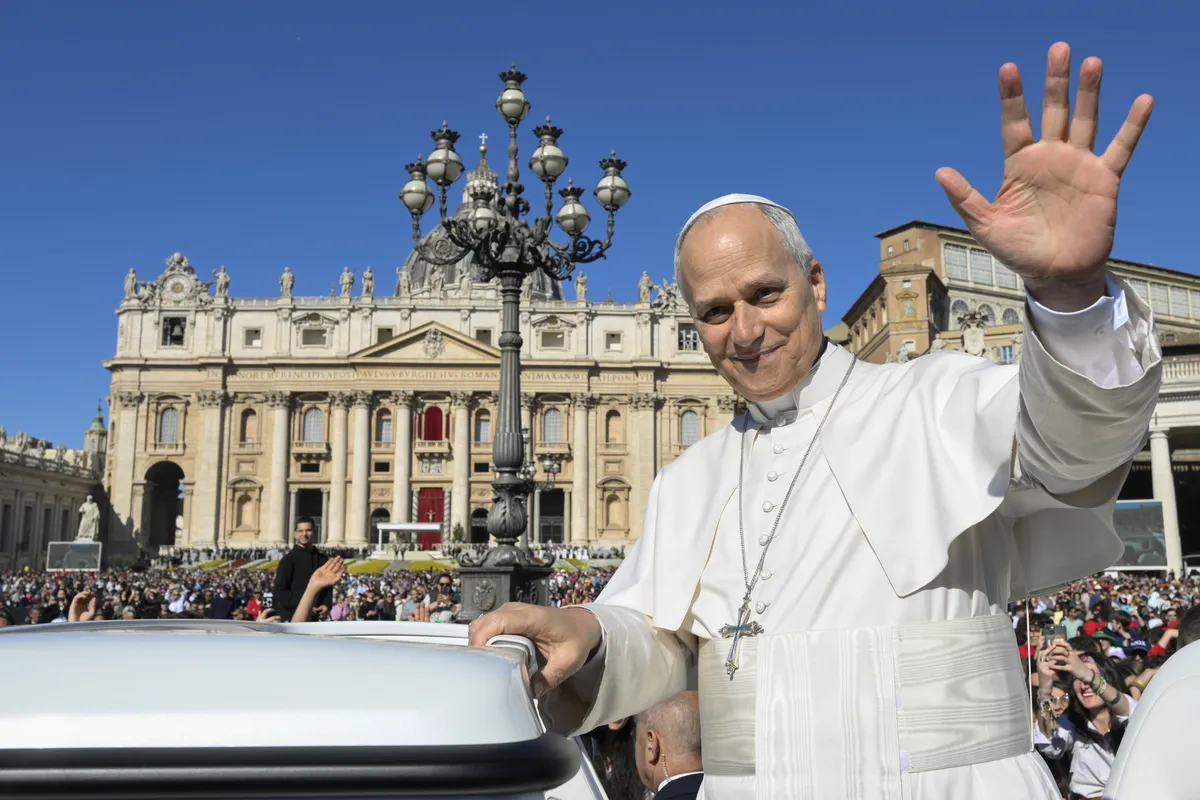
On the morning of May 25, 2026, the Vatican’s Synod Hall hosted an unusual gathering: a pope and an AI company co-founder, presenting a document together.
Pope Leo XIV released his first encyclical, Magnifica Humanitas (“Magnificent Humanity”), alongside Christopher Olah, co-founder of Anthropic, as well as Cardinal Víctor Manuel Fernández (head of the Dicastery for the Doctrine of the Faith), Cardinal Michael Czerny, theologian Anna Rowlands of Durham University, and ethicist Léocadie Lushombo of Santa Clara University.
The composition of that stage was itself a statement.
What the Encyclical Actually Says
The central claim is direct: AI is not a morally neutral tool, and the ethics of AI are embedded in its design, not just its use.
This goes further than most current AI ethics frameworks, which typically frame the problem as one of deployment and governance. The encyclical argues that building a system which reduces human beings to optimization inputs is itself a dignity violation, before a single user touches it.
The document identifies several specific risks. Delegating ethical judgment to algorithms erodes personal moral responsibility over time. Defining human worth by technical productivity strips away everything that makes life meaningful. Transhumanist efforts to transcend natural human limits through technology receive an explicit rebuke.
On military AI, the encyclical calls for multilateral frameworks and rejects any party using technological superiority to pursue unilateral military advantage.
Leo XIV closes with a contrast between Babel and Jerusalem. Babel is humanity building “towers of power.” Jerusalem is “a community where people take care of one another.” The direction AI civilization takes, the Pope argues, depends on which city we choose to build.
Why Anthropic
The selection of Christopher Olah as a co-presenter generated significant discussion in both tech and religious media.
Olah is one of the leading figures in AI interpretability research, the field dedicated to making neural network decision-making legible to humans. His work directly addresses the encyclical’s concern about surrendering moral judgment to opaque systems.
There is also an unavoidable political dimension. In February 2026, Anthropic refused to give the US military unrestricted access to its AI models. The Trump administration responded with punitive measures, and litigation is ongoing. The Vatican’s decision to feature Olah at this particular moment reads as a clear signal of where the Church stands.
A 135-Year Parallel
The encyclical was signed on May 15, exactly 135 years after Pope Leo XIII signed Rerum Novarum, the founding document of Catholic social teaching.
Rerum Novarum appeared in 1891, at the height of the Industrial Revolution, in response to widespread labor exploitation. It established principles that were controversial at the time: workers have the right to organize, capital cannot be its own justification, the state bears responsibility for the vulnerable. Those principles eventually shaped labor law in dozens of countries.
Now AI is reshaping the nature of work and compressing human agency in decision-making. The Catholic social tradition’s core concern has not changed. Only the subject has.
What Happens Next
With over one billion Catholics worldwide, a papal encyclical has direct normative influence across Catholic educational institutions, healthcare systems, and social services organizations globally. Where exactly this document shapes AI ethics debates, and on what timeline, is worth watching.
Compared to individual national regulations, a teaching document that operates across borders aims to influence value formation before formal rules are written. That is a different kind of regulatory play, and one that has worked before.
If this was useful, subscribe to the newsletter for weekly AI PM insights and GenAI case studies.
Further Reading
Related Articles
Anthropic Calls for a Global AI Pause: Recursive Self-Improvement Is Closer Than You Think
Claude's task horizon doubles every four months. Anthropic engineers ship 8x more code than five years ago. The company racing toward a near-trillion dollar IPO is now calling for a global pause mechanism before things get out of hand.
Court Upholds Anthropic Exclusion: Making Safety Restrictions Predictable
A US appeals court backs excluding Claude from the defense supply chain in a 2-1 decision. The ruling addresses purchasing authority, not whether removing safeguards improves reliability. Product teams still need to distinguish intended refusals from mistakenly blocked tasks.