SoftBank's $6B OpenAI Margin Loan Stalls: Banks Won't Accept Private AI Valuations
TL;DR
SoftBank's attempt to raise $6 billion using its 13% OpenAI stake as collateral has stalled, Bloomberg reported today. Even an $852B paper valuation can't convince lenders to accept unlisted equity — exposing a structural crack in private AI financing.
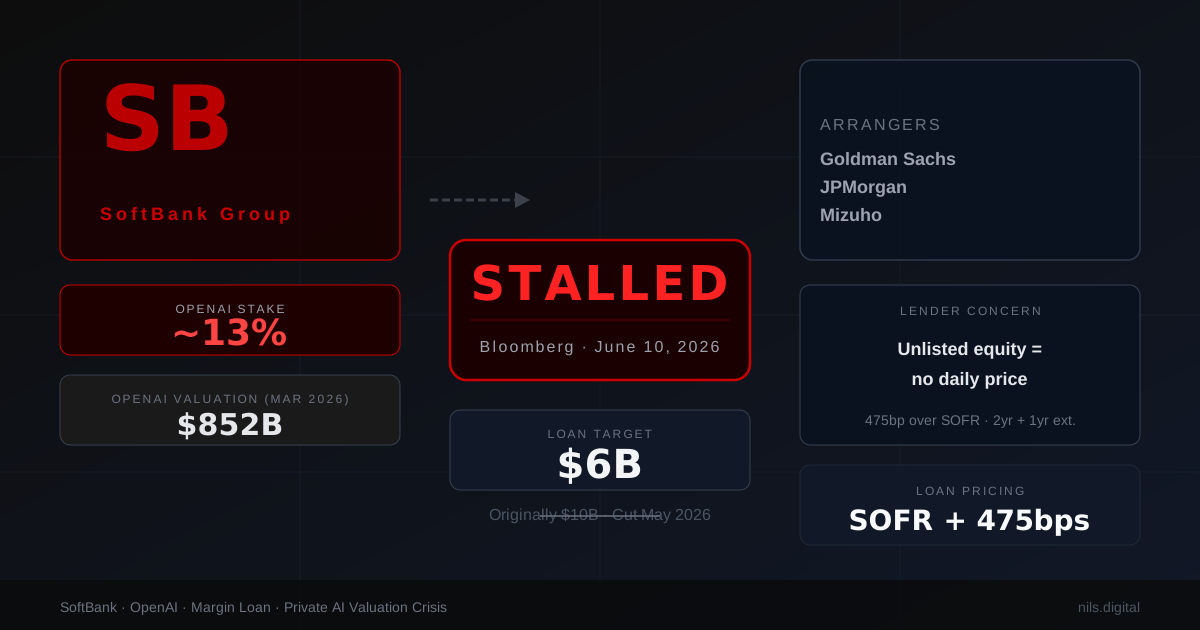
Bloomberg reported today that SoftBank Group’s attempt to raise at least $6 billion from a margin loan backed by its OpenAI stake has stalled — just weeks after the Japanese conglomerate cut its original $10 billion target.
SoftBank says it is considering various fundraising options and could still move forward with the margin loan at a later stage. For now, the talks are paused.
The Core Problem: Unlisted Equity Has No Daily Price
OpenAI’s post-money valuation reached $852 billion in March 2026. SoftBank holds roughly 13% of the company, putting the stake’s paper value at around $110 billion — more than 18 times the $6 billion loan target. Yet banks are not buying it.
According to IFR, Goldman Sachs, JPMorgan, and Mizuho are the loan arrangers, but the pool of participating lenders is smaller than expected. One Tokyo banker put the structural problem plainly: most financial institutions are unable to accept unlisted shares as margin loan collateral in the first place. Japanese domestic banks lack the internal frameworks for evaluating private equity. European and American counterparts are cautious about long-term AI sector exposure.
The loan itself is priced attractively — 475 basis points over SOFR, with a two-year term extendable by one year. The rate is not the issue. The issue is that nobody can reliably answer what the collateral will be worth in 18 months.
From $10B to $6B to Stalled
In early May, Bloomberg reported that SoftBank had already cut its target from $10 billion to approximately $6 billion after initial lender hesitation. Today’s report marks a further deterioration: even the reduced $6 billion figure is now off the table.
SoftBank’s need for liquidity is straightforward. Alongside its OpenAI stake, the conglomerate has committed tens of billions to the Stargate AI infrastructure project. The margin loan was designed to extract cash from the OpenAI position without selling shares — preserving the equity upside while unlocking working capital. A direct share sale would signal a loss of conviction, a far more expensive message to send to the market.
That middle path is closed, at least for now.
OpenAI’s IPO Timeline and the Bind It Creates
On June 8, OpenAI confidentially filed an S-1 with the SEC, but CEO Sam Altman indicated a public listing is not imminent. Until OpenAI trades on a public exchange, its shares have no daily settlement price — and that is precisely what lenders need to structure collateral efficiently.
SoftBank’s predicament is, in one sense, also pressure on OpenAI’s IPO timeline. Once OpenAI is listed, price discovery arrives, and the structural barrier for margin lending drops dramatically. The feedback loop runs both ways: SoftBank wants liquidity, lenders want a public price, and OpenAI controls the timeline.
The broader signal is worth noting. An $852 billion paper valuation is a remarkable figure — but it means something different to a credit committee than it does to a venture fund. Private AI financing is running into structural limits that capital appetite alone cannot solve.
If this was useful, subscribe to the newsletter for weekly AI PM insights and GenAI case studies.
Further Reading
- SoftBank Commits $75B to France AI Infrastructure
- Anthropic Confidentially Files S-1 at $965B Valuation
Sources
Related Articles
SoftBank Launches Bond Sale: OpenAI Funding Progress and Borrowing Costs Are Different Tests
SoftBank launches dollar and euro bonds to help fund its third OpenAI investment tranche. The offering changes how an existing commitment is financed; settlement and final borrowing costs remain unconfirmed.
OpenAI Launches Dots: Ongoing Work Should Not Become a Growing Review Queue
OpenAI is rolling out dots to eligible paid users for work that continues between conversations. Read-only background research and limited memory controls make missed commitments and accumulated review work more useful tests than activity alone.