Samsung Deploys ChatGPT Enterprise and Codex Companywide, Reversing Its 2023 AI Ban
TL;DR
Samsung Electronics is rolling out ChatGPT Enterprise and Codex to all employees in South Korea and its global DX division, reversing a company-wide AI ban imposed after a 2023 source code leak. Now among the largest enterprise AI contracts OpenAI has signed to date.
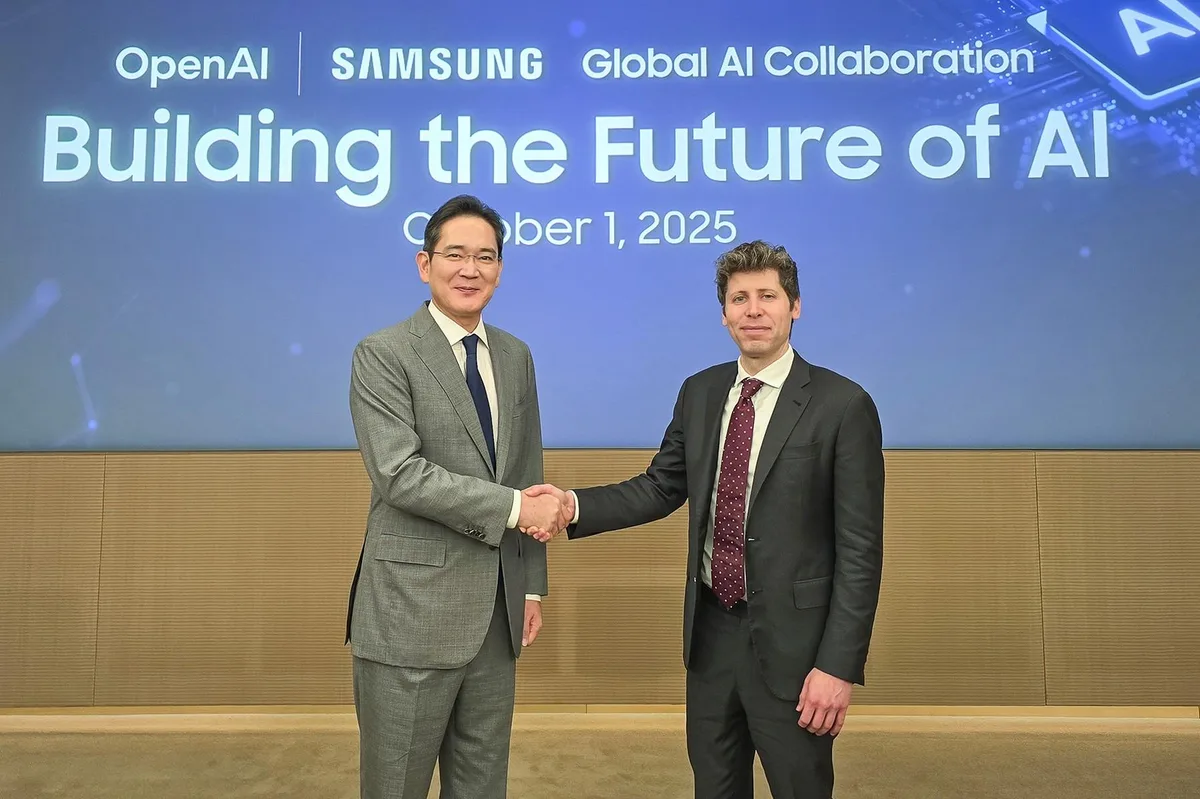
Samsung ChatGPT Enterprise and Codex are now available to all Samsung Electronics employees in South Korea and across the company’s global Device eXperience division (DX Division), marking one of the largest enterprise AI contracts in OpenAI’s history. The announcement, made on June 21-22, 2026, closes a three-year arc that started with one of the most cited enterprise AI cautionary tales of the decade.
In March 2023, Samsung engineers accidentally exposed chip design source code and internal meeting notes while using ChatGPT for debugging and documentation tasks. Samsung responded within a week with a company-wide ban on generative AI tools, covering ChatGPT, Bard, and all third-party AI applications. By late 2025, Samsung SDS, the group’s IT services subsidiary, had secured formal authorization from OpenAI as the official Korean reseller for ChatGPT Enterprise, positioning Samsung simultaneously as a major internal customer and as a distribution channel for OpenAI’s enterprise expansion into Korea.
From Blanket Ban to Full Deployment
The rollout covers two tools with distinct target audiences. ChatGPT Enterprise is positioned for knowledge work: information search and analysis, document creation, ideation, and data interpretation. Codex, OpenAI’s coding agent, is aimed at engineers and developers, enabling them to generate internal tools, websites, and automated workflows through natural language. The four primary deployment functions are research and development, manufacturing, marketing, and management support.
Samsung’s Semiconductor Division (DS Division) remains outside this rollout, maintaining stricter restrictions on external AI tools. DS manages DRAM and NAND flash memory development, where the technical sensitivity exceeds consumer electronics by a considerable degree. The differentiated policy reflects Samsung’s tiered risk assessment across its business units, and it is the clearest indicator of where the company currently places its confidence in enterprise AI security controls.
Alongside ChatGPT Enterprise and Codex, Samsung is also deploying Google Gemini and Anthropic Claude, maintaining a multi-vendor AI strategy. This approach gives Samsung negotiating leverage and reduces dependence on any single vendor’s product roadmap. See our earlier coverage of Claude’s enterprise market position for context on the competitive landscape.
What the Numbers Actually Show
Samsung Electronics employs roughly 270,000 people globally. The DX division covers mobile phones, televisions, displays, and home appliances, with an estimated headcount around 100,000. Adding Korea-based employees across all divisions (with some overlap), the total licensed user count likely sits between 100,000 and 150,000.
ChatGPT Enterprise pricing is not publicly disclosed, but market estimates put it at $30 to $60 per user per month. Codex carries additional developer-tier pricing on top. At 100,000 licensed users and conservative pricing, the annual contract value for ChatGPT Enterprise alone runs between $36 million and $72 million. This scale is consistent with OpenAI describing the deal as one of its largest enterprise contracts.
License counts and active usage rates are different measures. Enterprise software typically shows a 60 to 80 percent gap between licensed users and monthly active users, with large deployments often reaching only 20 to 40 percent active user rates in the first six months. Codex produces more measurable output than general-purpose chat, and developer tools tend to see higher engagement because the workflow integration is concrete. Samsung has not disclosed any usage targets or benchmarks.
The 2023 data leak resulted from engineers sending sensitive materials to external servers. Enterprise deployments route API calls through isolated tenant environments, keeping data out of OpenAI’s training pipeline. That architectural separation addresses the original data flow problem directly. Whether it changes individual behavior at scale depends on the accompanying usage policies and training programs, not on the contractual privacy terms. For background on OpenAI Codex’s technical direction and acquisition history, our earlier reporting covers the details.
Metrics Worth Tracking
Three data points can verify the actual impact of this deployment within six to twelve months, all sourced from public disclosures.
Samsung SDS quarterly earnings calls are the first signal. If Samsung SDS converts its OpenAI reseller status into deployment contracts with other Korean companies, this revenue will appear in its services segment numbers. Q3 and Q4 2026 results are the first observation windows.
The DS Division policy trajectory is the secondary test. If Samsung’s semiconductor business adopts similar AI tools by 2027, it signals that the company’s security controls have reached a threshold it considers adequate for its most IP-sensitive work. A continued restriction is a clear statement that current controls are not sufficient for chip design environments at this point.
The third metric is competitive response from Chinese consumer electronics and semiconductor companies. Export controls prevent Chinese firms from deploying OpenAI tools, but locally deployed alternatives like DeepSeek remain available. If Samsung’s deployment produces measurable design cycle improvements, that data will inform how aggressively Chinese counterparts accelerate their own enterprise AI rollouts. The divergence in enterprise AI tooling between Samsung-tier and Chinese competitors will leave measurable traces in hardware design efficiency over the next two to three years.
Sources: OpenAI Official Blog, Asia Business Daily
If this was useful, subscribe to the newsletter for weekly AI PM insights and GenAI case studies.
Related Articles
OpenAI Says It Has 1 Billion Active Users and More Than 2 Million Business Customers
OpenAI CFO Sarah Friar says the company now reaches more than 1 billion active users and over 2 million businesses, alongside major model price cuts whose effect on paid usage remains unproven.
ChatGPT Work Launches as OpenAI Folds Codex Into Desktop App to Rival Claude Cowork
OpenAI launched ChatGPT Work on July 9, an autonomous office agent built on GPT-5.6, and folded Codex into a new three-tab desktop app alongside Chat and Work. The launch lands three days after Anthropic's Claude Cowork expanded to mobile and web.