FCC Blocks New Foreign-Made Robots and Inverters from Equipment Authorization
TL;DR
The FCC added foreign-produced advanced robots and power inverters to its Covered List, blocking new equipment authorizations while preserving previously authorized models and allowing conditional exemptions.
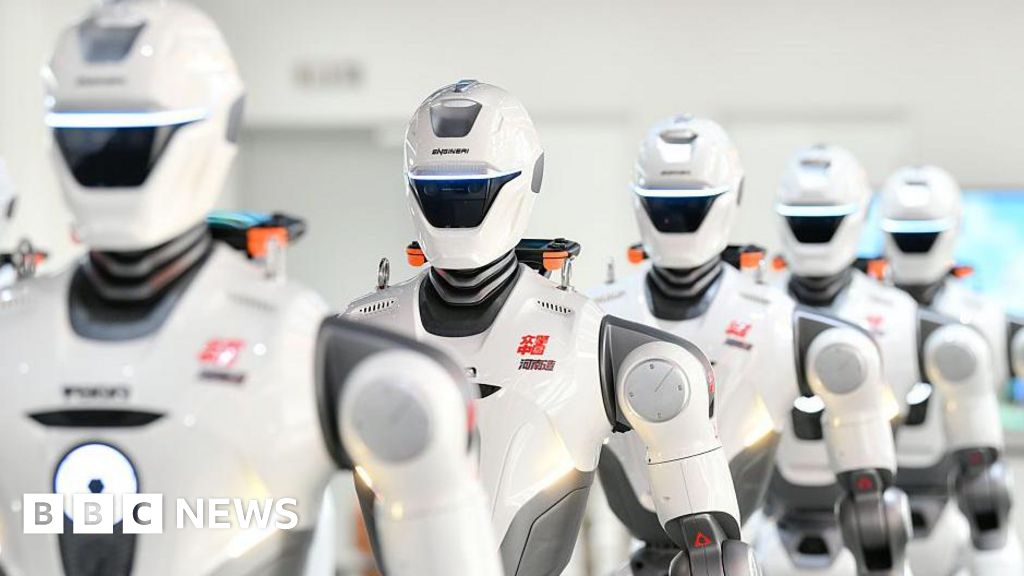
The effect of this rule on the US robotics supply chain can be tested against a concrete condition. If the FCC grants few Conditional Approvals over the next six months and imports of newly released humanoid and quadruped robots fall, the authorization block will have changed purchasing behavior. The available evidence establishes that a regulatory entry point has closed; it does not yet establish that US production can replace the affected supply.
On July 28, 2026, the FCC released DA 26-786 and added “foreign-produced power inverters” and “foreign-produced advanced robotic devices” to its Covered List. Under 47 CFR 2.903(a), covered equipment cannot receive a new equipment authorization. Applicants must also certify that their product is not prohibited covered equipment. The BBC reports that models already authorized by the FCC may still be sold or imported, so the decision does not immediately remove every foreign robot already on the US market.
A product-category rule broader than Chinese brands
The legal text does not name Unitree, UBTech, AgiBot, or any other individual manufacturer. It also does not limit the covered categories to China. The additions reach all foreign-produced advanced robotic devices and all foreign-produced power inverters. The BBC reports the measure in the context of US-China competition in robotics and AI and quotes the Chinese embassy in Washington objecting to the use of national-security grounds to “politicise” trade. In implementation, however, production location and product category determine coverage; a company cannot escape the rule merely by changing a brand name.
The FCC’s stated rationale centers on network connectivity. Power inverters are used in data centers, solar installations, and grid resources. According to the public notice, their remote connections could be exploited to shut them down, exfiltrate data, enable surveillance, or open a route for a cyberattack. Advanced robots combine sensing, data collection, connectivity, and physical action. The interagency determination says an attacker could manipulate their data or operation and might remotely commandeer a device.
Those statements are the US administration’s risk determination, not published comparative testing of named products. DA 26-786 does not disclose exploit results or brand-level vulnerability rates. That evidence boundary matters because the measure applies to an entire production category rather than to equipment with a documented individual failure.
Exemption decisions will determine the supply impact
The policy provides a Conditional Approval route. A foreign inverter manufacturer may submit information to DoW or DHS and seek a finding that a particular product or class does not pose an unacceptable risk. For advanced robots, DoW performs that assessment. If the FCC receives a further national-security determination supporting an exemption, it can update the Covered List.
This route means the decision is not necessarily a permanent exclusion of every foreign device. It also creates an additional review step whose timing, evidentiary requirements, and approval volume will affect replacement costs for data-center operators, solar developers, and robotics buyers. Previously authorized models provide a short-term buffer, but new generations normally require authorization before entering the market.
The measurable outcomes over the next three to six months are the FCC’s exemption updates, the number of newly introduced foreign robots that obtain authorization, and any deployment delays reported by buyers. Numerous rapid Conditional Approvals would make the measure function more like case-by-case cybersecurity review. Few approvals would turn DA 26-786 into a substantial market-access restriction.
Sources:
Related Articles
AMD Plans to Buy World Labs for $8.2 Billion: What World Models Change for Compute
AMD announces an all-stock agreement to buy Fei-Fei Li’s World Labs, targeting completion by year-end. Model research can inform hardware design earlier, but simulation costs, transfer to robots and customer adoption remain separate questions.
a16z Raises $1.1B Machine Age Fund for AI Hardware, Data Centers, and Power
Andreessen Horowitz has raised the $1.1B Machine Age Fund for chips, memory, networking, storage, data centers, robotics, and home AI devices, while its deployment pace and portfolio remain undisclosed.