Meta Nearly Doubles Quarterly Capex as Free Cash Flow Falls to $784 Million
TL;DR
Meta's second-quarter revenue rose to $60.8 billion, but $31.08 billion of capital expenditure reduced free cash flow to $784 million as the company raised the lower end of its annual capex outlook.
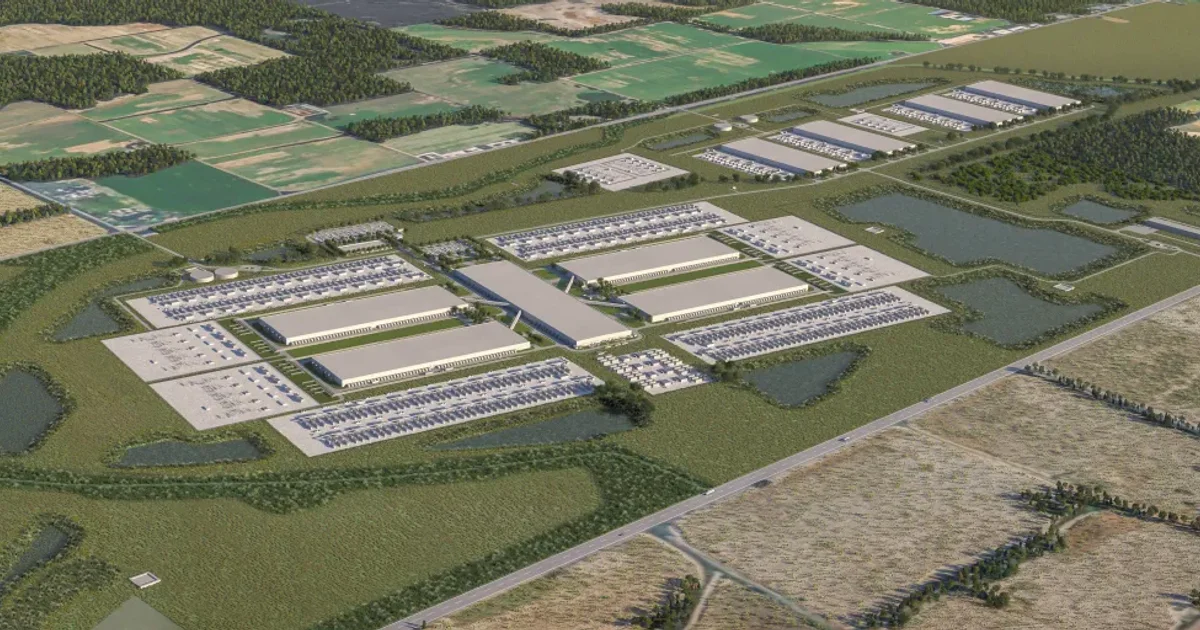
Meta’s AI investment now faces a constraint that can be tested in its accounts. If free cash flow remains far below the year-earlier level next quarter while capital expenditure continues near the current pace, advertising growth will not yet have produced a comparable cash return. A strong rebound in free cash flow while the company maintains its $130–145 billion full-year capex plan would weaken that conclusion.
Meta Platforms reported its second-quarter results on July 29, 2026. Revenue increased 28% from $47.516 billion to $60.801 billion. Ad impressions across its Family of Apps rose 14%, the average price per ad increased 12%, and daily active people reached 3.60 billion. Mark Zuckerberg said AI is accelerating the core business, but the release does not quantify revenue attributable to AI. Advertising metrics and AI investment rose during the same period; the filing does not establish how much one caused the other.
Costs and expenses climbed 55% to $42.026 billion. Operating income consequently fell 8% to $18.775 billion, while the operating margin contracted from 43% to 31%. The expense figure includes $2.40 billion of charges related to legal proceedings and $1.18 billion of severance expense connected with the May workforce reduction. Net income was $15.848 billion, down 14%. Those exceptional charges mean the full decline in profit cannot be assigned to AI infrastructure.
$31.08 billion absorbs most operating cash
Meta generated $31.862 billion of operating cash flow during the quarter. It spent $30.116 billion on property and equipment and paid another $962 million of finance-lease principal. The company’s capital-expenditure measure therefore reached $31.08 billion, about 1.83 times the $17.012 billion recorded a year earlier. Free cash flow fell from $8.549 billion to $784 million. Reuters likewise centered its coverage on the cash-flow pressure created as Meta’s AI buildout grows, rather than questioning whether revenue increased.
Management narrowed its 2026 capital-expenditure forecast from $125–145 billion to $130–145 billion, lifting the lower bound by $5 billion. It expects third-quarter revenue of $61–64 billion and full-year expenses of $165–169 billion. Long-term debt stood at $83.664 billion at the end of June, up from $58.744 billion at the end of 2025. Cash, cash equivalents, and marketable securities totaled $90.26 billion, so the company still has substantial near-term capacity to fund construction.
Fewer employees, more infrastructure spending
Reported headcount was 75,472 at the end of June, down 1% year over year. That number still includes approximately 8,000 employees affected by the May workforce reduction, most of whom are expected to leave reported headcount by the end of the third quarter. Meta is reducing its workforce while directing more cash toward data centers and equipment. The filing does not separate spending on AI training, inference, ordinary servers, land, and construction, preventing outsiders from calculating the capital return of any single AI product.
The measurable variables over the next three to six months are third-quarter free cash flow, actual capital expenditure, and whether revenue lands within the $61–64 billion guidance range. If revenue keeps growing at a double-digit rate while free cash flow remains close to this quarter’s $784 million, Meta will have to support construction with its cash holdings or additional financing. A material cash-flow recovery would instead suggest that equipment purchases were concentrated in this quarter; any profit comparison would still need to treat the legal and severance charges separately.
Sources:
Related Articles
Meta Expands Muse Shopping: Fewer Steps Still Need a Clear Comparison Scope
Meta adds 10 retail connections at Connect, Spotify announces its Muse integration, and glasses support remains a coming-months plan. Easier purchasing does not establish that an agent compared the whole market.
NVIDIA Posts $96.2 Billion Quarter and Still Guides Higher With Zero China Data Center Compute Revenue
NVIDIA's fiscal 2027 second-quarter revenue rose 106% to $96.2 billion, including $89.0 billion from Data Center; its $108.0 billion outlook assumes no China Data Center compute revenue.