OpenAI Launches Dots: Ongoing Work Should Not Become a Growing Review Queue
TL;DR
OpenAI is rolling out dots to eligible paid users for work that continues between conversations. Read-only background research and limited memory controls make missed commitments and accumulated review work more useful tests than activity alone.
OpenAI has begun rolling out dots, persistent agents that keep working between conversations. Whether this reduces forgotten commitments still lacks a long-term comparison: more results can also mean more work awaiting human review. I would judge the product by whether fewer commitments are missed and whether the review queue keeps growing.Announcement
DevDay took place on 2026-09-29 in the United States. Its official schedule lists a 10:00 Pacific opening keynote, equivalent to 01:00 on 2026-09-30 in Taipei. MacRumors published at 15:44 PDT, or 06:44 in Taipei. This article uses the September 30 Taipei publication date and a 09:04 reporting cutoff. Neither the schedule nor the report establishes when individual accounts received access.Schedule Independent report
Dots run on GPT-6 Astra with their own cloud computer. OpenAI says plugins connect them to more than 4,000 apps; that measures potential reach, not demonstrated reliability across workflows. Pro initially excludes the EEA, Switzerland and the UK; Business Premium covers supported regions. Enterprise beta access requires an administrator to enable it, so availability is not universal.Capabilities Independent confirmation Access
OpenAI describes an early tester whose dot spotted a forgotten invoice, prepared it and sent it after approval. This is a vendor-reported use case without an overall success rate, not evidence of typical time savings.Early use
Background research is separate from external actions
OpenAI calls its search for useful information “proactive research.” Code-enforced restrictions make those research tools read-only: they cannot directly message people, change connected apps or control a browser. Follow-up actions remain subject to authorization and checks. Some can use prior approval; continuing in the background does not expand permission.Research and action controls
An eligible plan includes the first dot, and conversations do not consume ChatGPT allowances. The announcement says delegated Codex and ChatGPT Work tasks still count. The getting-started page separately exempts dots usage for the first month, with later terms to follow. The documents do not fully clarify whether that promotion covers delegated tasks. The introductory experience should not be treated as a promise of unlimited work indefinitely.Plan coverage Delegated usage First-month terms
The part of the invoice example I find most useful is discovering something overlooked. When someone already knows exactly what needs doing, a one-off delegation may suffice. A persistent agent adds value if it remembers unfinished responsibilities and notices changes that require attention. That suggests letting people choose what remains under observation, rather than turning every update into another task. This is a product judgment derived from the mechanism, not a conclusion established by long-term outcome data.
Suppose a collaboration document changes its wording without altering deadlines or commitments. An agent could retain the update without creating a new decision. If the delivery date moves forward, it has a reason to identify affected work and ask someone to resolve conflicts. The hypothetical distinction is between changing information and changing responsibility. Even when a model can complete more steps, human attention should remain focused on changes that affect outcomes.
Remembering preferences also requires correcting old assumptions
The official FAQ identifies a missing control: individual dot memories cannot currently be viewed, deleted or directly edited. Deleting the dot clears its own context, while disconnecting an app does not erase information already received. Accumulating context and precisely correcting one old assumption offer different levels of control today.Memory limitations
For a product that follows work over time, this limits the responsibilities I would be comfortable assigning. When terms change, a person should be able to identify the outdated assumption explicitly, rather than relying on repeated conversations to guess whether the agent has understood. That does not establish that dots will reuse incorrect information. It explains why increasing familiarity still needs an inspectable way to make corrections.
I see dots as a persistent-assistant product with a defined rollout, while reserving judgment on its long-term effects. If comparable work produces fewer missed commitments without an expanding review backlog, background execution has a credible claim to helping attention. If omissions merely become another to-do list, the scope of monitoring and the timing of interruptions still need adjustment.
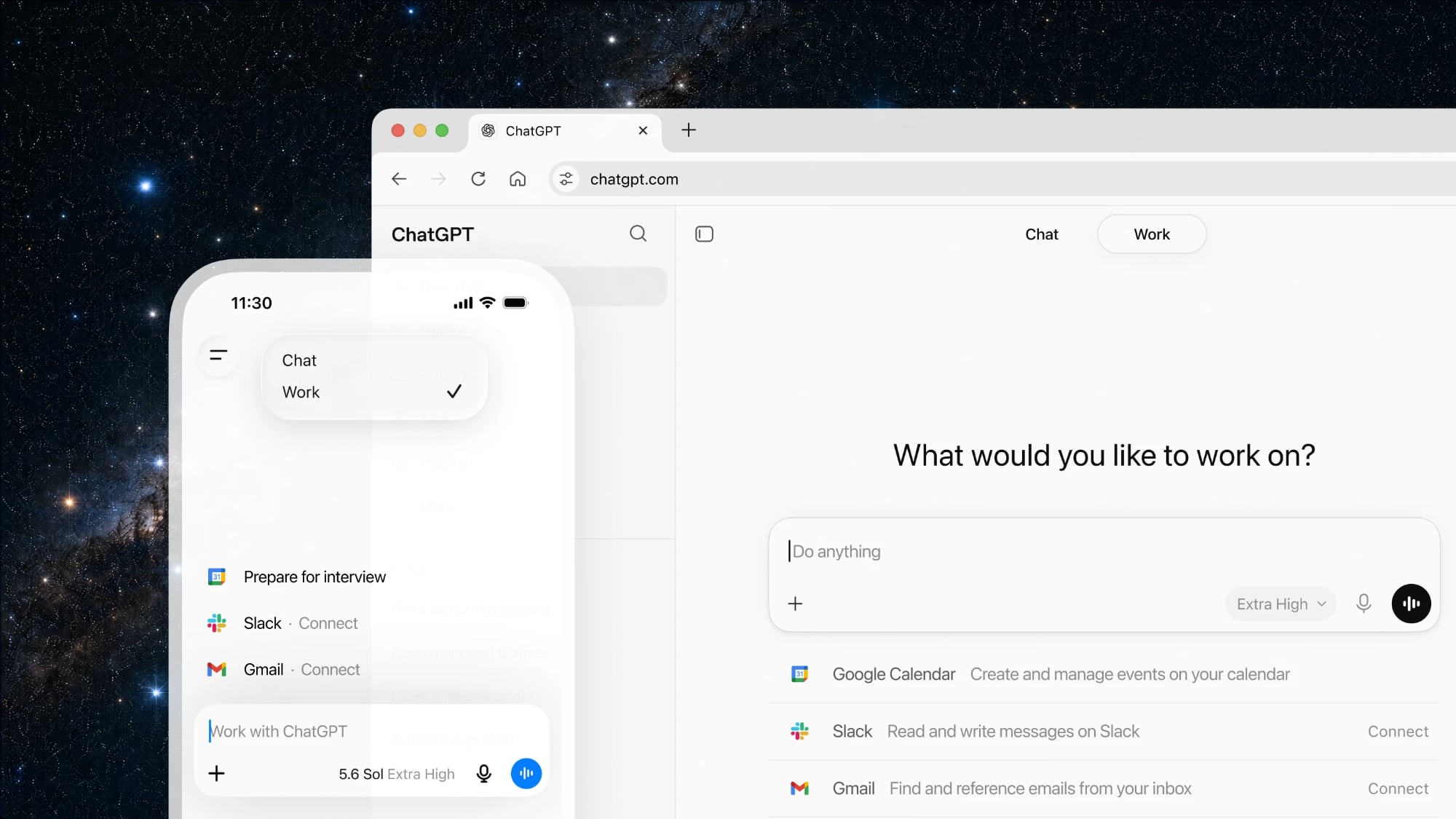
The cover reuses an existing ChatGPT Work interface image from this site; it does not show dots. Event-image downloads failed because of DNS resolution errors, so a related local image was used.
Sources:
Related Articles
GPT-6 Sol and Luna Cut Prices: Long-Task Savings Depend on What Gets Reused
OpenAI launches GPT-6 Sol and Luna with input prices 50% below prior promotional rates. Cached reads bring further discounts, but writes, retries and changing information still affect the total bill.
NVIDIA Expands Agent Safety: Runtime Permissions Do Not Guarantee Correct Work
NVIDIA launches its Open Agent Safety Platform, with OpenShell 0.1.0 enforcing file, network and tool permissions outside the model. That can contain mistakes, but more than 100 participating organizations do not establish deployment results or correct work.