Mistral Signs Airbus and BMW: Europe's Industrial AI Pivot
TL;DR
Mistral AI announced industrial AI partnerships with Airbus and BMW today, applying specialized models to crash simulation and aircraft design. European data sovereignty is now a buying criterion, not a nice-to-have.
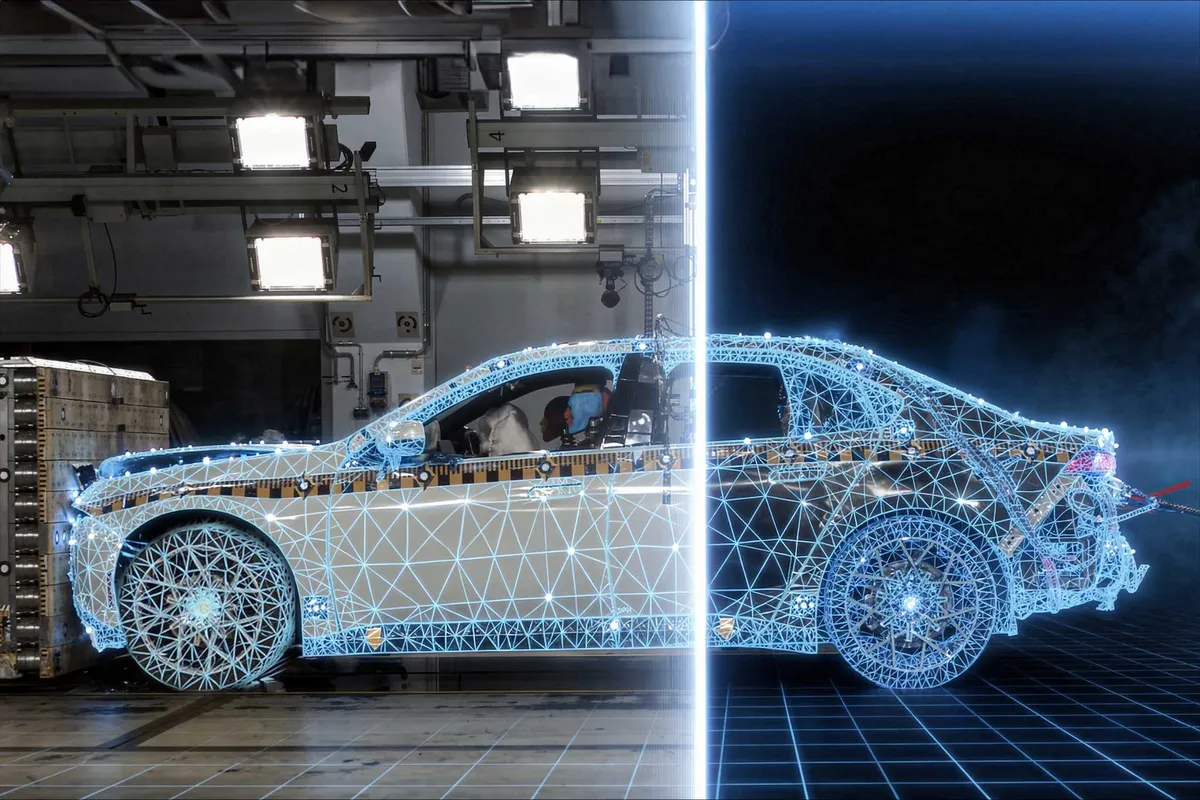
Mistral AI announced partnerships with Airbus and BMW at its AI Now Summit on May 28, marking the French startup’s clearest move from conversational AI toward industrial applications. The deals, alongside the May 22 acquisition of physics simulation startup Emmi AI and a new collaboration with semiconductor equipment maker ASML, show Mistral building a focused industrial AI stack in a single week.
BMW’s Large Industry Model
BMW has accumulated over one petabyte of crash simulation data across decades of vehicle development. The company runs thousands of virtual crash simulations every week, and the current workflow requires engineers to manually interpret each output cycle, a process that limits how many design variations a team can realistically test.
The collaboration with Mistral centers on building a Large Industry Model (LIM) trained on BMW’s proprietary engineering dataset. LIMs differ from general-purpose language models in a fundamental way: the goal is to encode physical domain knowledge directly into the model, giving it an understanding of how vehicle materials deform under impact forces. BMW Group CIO Dr. Franz Decker described the effort as “building specialized AI which supports complex development tasks” by combining BMW’s engineering datasets with Mistral’s model training capabilities.
BMW’s crash simulation dataset spans more than one petabyte. Running thousands of weekly simulations and shaving hours off each cycle compounds into a significant acceleration in engineering iteration speed without increasing compute budgets.
Airbus: Five Years, Four Divisions
The Airbus agreement is structured as a five-year deal covering commercial aviation, helicopters, defense, and space divisions. Financial terms were not disclosed.
Two application areas are spelled out: AI integration into cockpit safety systems, and digital simulation support for new aircraft designs. Commercial aircraft development cycles run up to a decade; inserting AI into the simulation layer compresses iteration time at the phases where engineering costs are highest.
Airbus cited data sovereignty as a hard requirement. Critical design and flight safety data must remain under European control, and that requirement is part of why Mistral is a viable supplier where US hyperscalers are not. Mistral is investing €4.7 billion in computing infrastructure across France and Sweden, including a 10 MW inference data center near Paris scheduled to come online in Q3 2026. That infrastructure is not a differentiator; it is a prerequisite for winning regulated European enterprise contracts.
Three Industries, One Thesis
BMW, Airbus, and ASML together cover automotive, aerospace, and semiconductor equipment manufacturing. All three carry strict requirements around data residency and supply chain security. Mistral’s simultaneous moves across all three sectors in a single week point to a deliberate positioning: sovereign AI infrastructure combined with industry-specific models, targeting European enterprises that cannot or will not send sensitive data outside the region.
The competition here is not OpenAI or Anthropic. Mistral is moving into territory occupied by Dassault Systèmes, Siemens Digital Industries, and Ansys, engineering software incumbents that have held these markets for decades. Mistral’s bet is that integrating modern reasoning models into simulation workflows creates a new AI layer that traditional engineering software companies will be slow to match.
Numbers and Timeline
Mistral’s current valuation stands at approximately $14 billion, with 2026 revenue projected to exceed $1 billion. The company employs around 1,000 people. BMW’s LIM initiative starts with crash simulation and is planned to scale across vehicle development and the broader BMW supply chain.
CEO Arthur Mensch has told French parliamentarians that an eventual IPO is the most reliable path to independence. With BMW and Airbus as anchor customers, a €4.7 billion infrastructure commitment, and the Emmi acquisition completing the physics AI foundation, the narrative for that path is taking shape.
Further reading:
- NVIDIA Computex 2026: Jensen Huang Pledges $150 Billion a Year to Taiwan
- Anthropic Revenue and SpaceX Compute Partnership
Sources:
- BMW Group and Mistral AI advance AI in crash simulation (BMW Group Press Release, 2026-05-28)
- Mistral Signs Airbus and BMW as it Brings AI to Manufacturing (Bloomberg, 2026-05-28)
If this was useful, subscribe to the newsletter for weekly AI PM insights and GenAI case studies.
Related Articles
Google Sends TPUs Into Orbit: A 15-Minute Test Is Not Continuous Compute
Google and Planet launch a Suncatcher prototype to test Gemma on four TPUs. Orbital hardware enables thermal and radiation testing, but cooling intervals, sustained compute and commercial costs remain unresolved.
Google Unveils Gemini 4 Argon: Code Modernization Needs the Right Baseline
Gemini 4 Argon raises the output limit to 1M tokens, initially for trusted cyber defenders. Its libgav1 example shows iterative improvement of a Rust port, but the 2.7-fold speedup is not measured against the optimized C++ original.