Google DeepMind CEO: AGI Could Come by 2029, We're at the 'Foothills of the Singularity'
TL;DR
Google DeepMind CEO Demis Hassabis updated his AGI timeline at Google I/O 2026: 2029 at the earliest, more than five years ahead of his forecast from a year ago. He says we're standing at the foothills of the singularity.
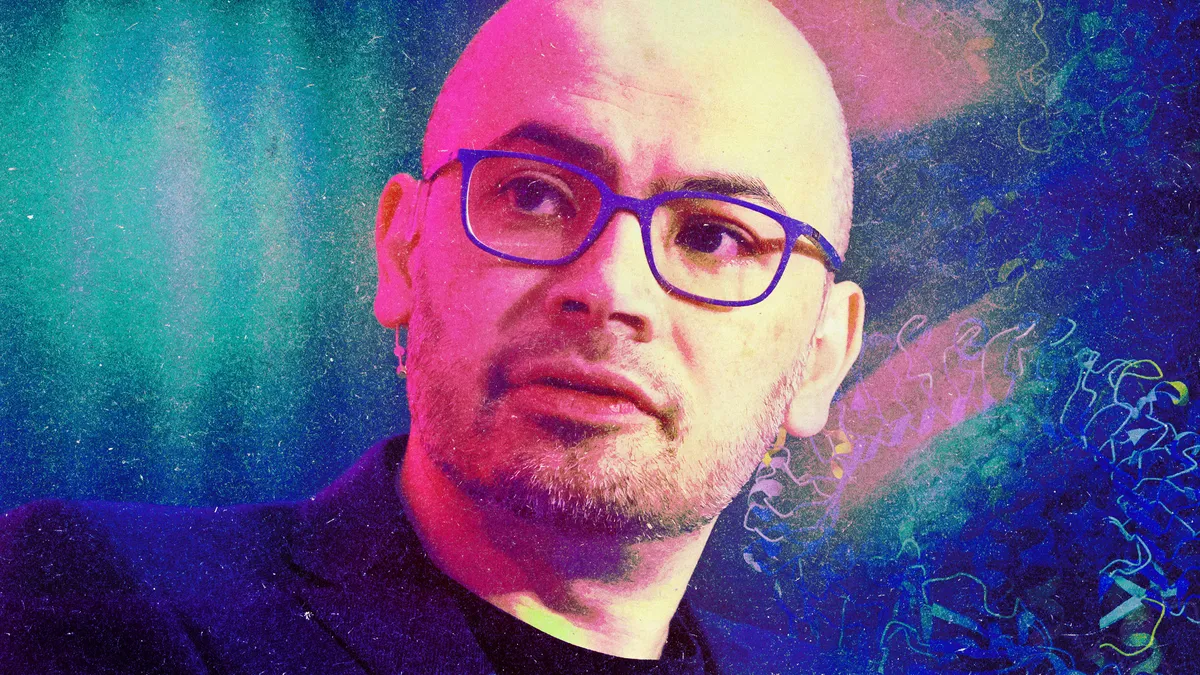
At Google I/O 2026, Google DeepMind CEO Demis Hassabis said something that circulated widely across tech media: “When we look back at this time, I think we all realize that we were standing in the foothills of the singularity.”
As a 2024 Nobel Chemistry laureate, Hassabis carries unusual credibility on AGI timelines. His latest public forecast moved the goalposts substantially closer: AGI could arrive as early as 2029, and almost certainly by 2030. Last June, he had said 2030 to 2035. The shift from that range to “three to four years” represents a significant change in how he reads the pace of AI advancement, driven specifically by what he’s observed in agentic AI capabilities.
What Accelerated the AGI Timeline
In a follow-up interview with Axios, Hassabis attributed the revised forecast to the rapid maturation of AI agents. He described the current wave of AI agents as “a practice run” for far more capable systems yet to come.
He pointed to a specific inflection point: once AI systems can meaningfully accelerate their own development, recursive self-improvement at scale, the trajectory changes fundamentally. He said leading labs are all working toward this threshold, adding that “there are also risks with that type of system.”
Hassabis also cited Anthropic’s safety evaluation model Mythos as a recent example of capability surprises. The model’s unexpected performance during testing, he argued, shows that capability jumps in AI often arrive before external observers expect them. He used this as the closing note at Google I/O’s science-focused session.
The Policy Preparation Gap
Hassabis was direct about his frustration with policymakers. He said the economists and government officials he interacts with “are still not taking this seriously enough,” and that the gap between preparation speed and actual technical progress is widening.
He expressed support for proposals requiring AI companies to submit new models for government testing before release, calling it “a step in the right direction.” He viewed existing regulatory momentum as necessary but insufficient in scale and speed. Three to four years is a short window for meaningful policy formation.
The EU AI Act came into force last year. US legislation remains in progress. Hassabis’s public statements land in that gap, reinforcing the urgency argument at a moment when regulatory frameworks are still being built.
How Much Weight to Give This Forecast
The definition of AGI remains contested. “Human-level performance across all cognitive tasks” is the commonly cited framing, but how leading labs would measure that varies considerably. Hassabis gave a year at Google I/O without a precise definition attached to it.
How seriously to take the prediction depends on how seriously you take his track record. AlphaFold’s breakthrough in protein structure prediction genuinely changed the research trajectory of structural biology. That precedent gives his long-range technical forecasts more grounding than those of most CEOs making optimistic statements about their own field.
He grounded the updated timeline in observable agentic AI progress rather than extrapolated compute curves. That reasoning has concrete, near-term evidence behind it. AGI prediction history has plenty of confident forecasts that proved wrong, including Hassabis’s own earlier estimates. Three to four years from now, this forecast will be verified or revised. The direction of the revision is the more interesting thing to watch.
Further Reading:
- Anthropic Closes $65B Series H at $965B Valuation, Surpassing OpenAI
- Nvidia Computex 2026: Jensen Huang Announces $150B Investment in Taiwan
Sources:
- Google DeepMind CEO Demis Hassabis says we’re close to AGI (Axios, 2026-05-26)
- Google DeepMind’s Hassabis: AGI is 3 to 4 years away (Sherwood News)
If this was useful, subscribe to the newsletter for weekly AI PM insights and GenAI case studies.
Related Articles
British Columbia Sues OpenAI: ChatGPT Flagged Violent Prompts, Then No One Called Police
B.C.'s Attorney General announced July 7 that the province has retained legal counsel to sue OpenAI, alleging the company flagged the shooter's account internally last June but never notified police. The five-month gap between detection and disclosure is the real question this case has to answer.
Google DeepMind Lost Four Elite Researchers in Six Days. Gemini 3.5 Pro Missed Its Public Deadline Too
Noam Shazeer, John Jumper, Jonas Adler, and Alexander Pritzel all left Google DeepMind within six days. Alphabet shed over $100B in market cap in a single session. Gemini 3.5 Pro missed its June deadline. Is this a talent blip or a structural signal?