GPT-5.6 Blocked Before Launch: The White House Issues America's First Preemptive AI Model Restriction
TL;DR
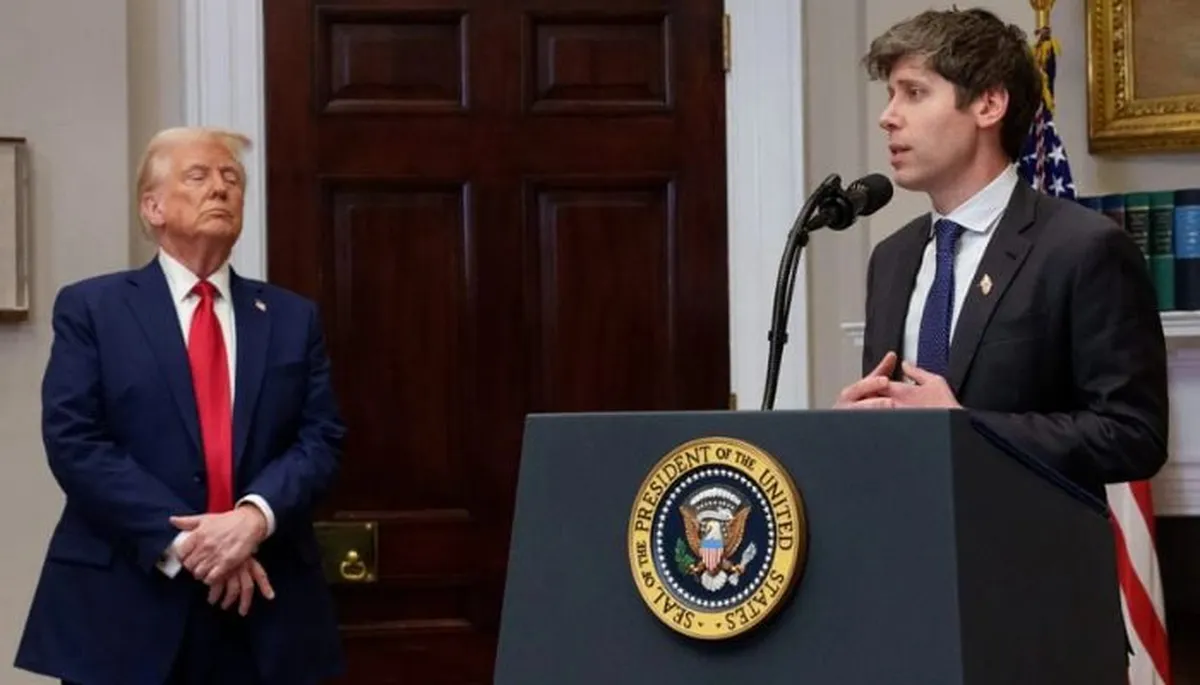
The White House ordered OpenAI to limit GPT-5.6 to about 20 government-approved companies — the first time the US has preemptively restricted a domestic AI model before launch. Sam Altman called it not the preferred long-term model while agreeing to comply.
Here’s my read: this restriction is export control wearing a safety label. A genuine safety-motivated regulatory action would start by publishing the evaluation criteria, defining which specific capabilities cross a threshold requiring controlled deployment. The White House announcement contains none of that. If you work in cybersecurity and have done red-team evaluations on frontier models, and you believe GPT-5.6 genuinely has capabilities that cross a meaningful threshold, I’d like to hear what dimension you’re measuring. The specifics matter here, not the headline.
What Happened
On June 25, 2026, the White House Office of the National Cyber Director and the Office of Science and Technology Policy jointly requested that OpenAI restrict GPT-5.6 deployment to approximately 20 government-approved enterprises, with access granted on a customer-by-customer basis.
The stated rationale: GPT-5.6 possesses “unprecedented cybersecurity capabilities” comparable to Anthropic’s Mythos 5, which the Commerce Department removed from the Commerce Control List in mid-June over similar concerns. Sam Altman acknowledged the situation in an internal memo, calling the customer-by-customer approval process “not our preferred long-term model” while indicating OpenAI agreed to comply as a conditional step toward eventual public release.
This marks the first time the US government has preemptively intervened to restrict a domestic AI company’s model deployment before launch. Two major models, Anthropic’s Mythos and OpenAI’s GPT-5.6, were both restricted within 30 days. Gemini 3.5 Pro and Grok 5 launched in the same period without comparable restrictions.
The Numbers Behind the Headlines
“Unprecedented cybersecurity capabilities” is both the most significant claim in this story and the least substantiated one.
No benchmark was specified. Not automated exploit generation rates, not the complexity of APT-level code production, not social engineering script quality. Without a verifiable metric, the claim exists outside any third-party falsifiability. The assessment came from government evaluators, not OpenAI’s own testing, which removes the self-reporting problem but adds a different one: opacity.
The scale gap is worth calculating. OpenAI targets millions of enterprise customers. Restricting to 20 means 99.998% of planned deployment volume is offline. At an average enterprise contract value of $500K per year, 20 companies generate $10 million annually. Against OpenAI’s 2025 annualized revenue exceeding $10 billion, GPT-5.6 contributes effectively nothing to the company’s financials during the restriction period.
The engineering reality is more damaging than the revenue math. “Customer-by-customer government approval” is structurally incompatible with how OpenAI’s API business works. API value comes from self-service access, instant onboarding, and usage-based pricing. A government signature requirement turns a sales cycle measured in minutes into one measured in months. The commercial window for this model version is closed for the restriction duration.
Business Standard quotes Public First director Brad Carson describing the approach as “ad hoc, personalised, opaque, possibly lawless.” He stopped short of denying the government’s authority to restrict dangerous AI, but framed transparency as a non-negotiable precondition. That assessment is the clearest public evaluation available.
A verifiable prediction: if the restriction holds through Q3 while Gemini 3.5 Pro and Grok 5 remain unrestricted, OpenAI’s enterprise API market share should show a measurable decline within 90 days. That’s the number to watch, not the policy statements.
What to Watch Next
Whether Gemini and Grok face equivalent scrutiny. If the restriction basis is capability-based, models with comparable frontier capabilities should face the same evaluation. The absence of equivalent restrictions on Google and xAI products within 30 days will be informative about whether this is consistent safety policy or selective enforcement.
How OpenAI frames this in its IPO roadshow. The company is targeting a Q4 2026 public offering. Regulatory uncertainty over model deployments is a material disclosure issue, not a footnote. Whether investors hear a coherent framework for future model releases, or hear ambiguity, will directly affect valuation pricing.
Anthropic Mythos status as a leading indicator. Mythos was restricted before GPT-5.6. If Mythos access has been restored to specific customers in the interim, that cycle length is the best predictor of GPT-5.6’s restriction duration and the actual throughput speed of the “customer-by-customer” approval process.
One useful data point from the same week: an OpenAI research paper documented that 99.8% of employee output tokens are now generated through Codex agents, with non-developer adoption growing three times faster than engineering roles. The internal workflow transformation is complete. External access to the same capability tier is being gated by government review. That gap between internal deployment and external access is the defining tension in AI policy right now.
If this was useful, subscribe to the newsletter for weekly AI PM insights and GenAI case studies.
Further reading:
Related Articles
OpenAI Wants California to Strengthen SB 53: What Is Still Missing from Enforceable Rules
OpenAI supports expanding California's SB 53 with monitoring of frontier models during training and evaluation and stronger lifecycle cybersecurity; amendment text, authority, thresholds, and timing remain absent.
GPT-5.6 Sol Launches Under Government Lock: Washington's New Frontier AI Gate
OpenAI's GPT-5.6 Sol launched June 26, restricted to ~20 government-vetted partners only. Sol Ultra scores 91.9% on Terminal-Bench 2.1, but the governance framework matters more than the benchmark.