GPT-5.6 Sol Launches Under Government Lock: Washington's New Frontier AI Gate
TL;DR
OpenAI's GPT-5.6 Sol launched June 26, restricted to ~20 government-vetted partners only. Sol Ultra scores 91.9% on Terminal-Bench 2.1, but the governance framework matters more than the benchmark.
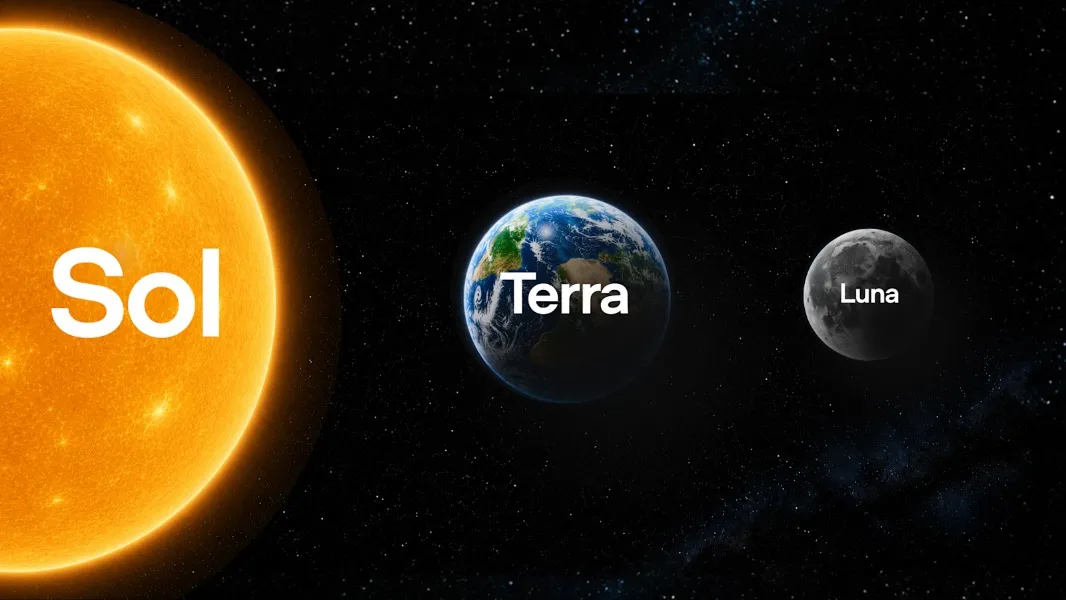
GPT-5.6 launched on June 26, with OpenAI releasing three models at once: Sol for hard problems, Terra for value, and Luna for volume. The announcement spread quickly in technical communities, but the reaction from most engineers was something like: not relevant to me yet. The reason is straightforward. GPT-5.6 is currently available only to roughly 20 enterprise partners whose participation was vetted and approved by the US government. No public API. No confirmed date for broader access.
That access model is worth examining more carefully than any benchmark number.
Here is my working assumption, and I would be glad to be corrected: government-gated access to frontier AI models is operationally unsustainable beyond 12 months. The number of models requiring review grows faster than regulatory capacity, and the structural competitive advantage handed to the first approved companies will attract antitrust scrutiny. If you are at an enterprise actively managing an AI procurement roadmap, particularly one disrupted by the Anthropic Fable 5 access ban in June, I am curious whether you have already begun building multi-provider fallback into your architecture as a policy hedge. The practical playbook matters here.
Sol, Terra, and Luna: The Three-Tier Breakdown
The naming has an unsubtle logic. Sol is the flagship, priced at $5 input and $30 output per million tokens, identical to GPT-5.5. No cost improvement at the top tier. Terra is the commercially interesting model: $2.50 input, 17% cheaper than Claude Sonnet 4.6’s $3, output at $15, claiming near-flagship performance at half the cost. Luna is the volume tier at $1 input and $6 output, targeting high-frequency low-complexity tasks.
None of these models are publicly accessible. OpenAI says broader availability is “weeks away” without a specific date.
What the Numbers Actually Say
OpenAI’s headline metric is Terminal-Bench 2.1: Sol Ultra scores 91.9% versus Claude Mythos 5’s 88.0%. Three things to consider before treating that spread as definitive.
First, Terminal-Bench 2.1 is OpenAI’s own benchmark for command-line workflows, developed and measured internally. Independent verification has not yet arrived.
Second, the 91.9% belongs to Sol Ultra, not the base Sol model. Base Sol scores 88.8% on the same benchmark. The 3.1-point gap between Ultra and base comes entirely from Ultra mode’s parallel subagent orchestration, where the model decomposes complex tasks, runs agents in parallel, then synthesizes results. Comparing Sol Ultra to Mythos 5’s single-model score means comparing different abstraction levels.
Third, the safety investment: 700,000 GPU hours of automated red-teaming. At roughly $3 per hour for H100 compute, that is approximately $2.1 million in safety compute. Real spend, but likely under one percent of total training cost. Sol did not trigger OpenAI’s Cyber Critical threshold in the Preparedness Framework, which is why it launched while Fable 5 remains banned.
Fermi estimate on the migration math: Terra’s $2.50 input pricing saves a mid-size SaaS running 100 million daily tokens roughly $1,500 per month compared to Claude Sonnet 4.6. That is $18,000 per year. Whether that justifies a migration depends on how deeply Sonnet 4.6 is embedded in your prompt chain and how much policy-interruption risk you are willing to carry.
What to Watch in the Next 90 Days
LMSYS Arena rankings for Terra. When Terra’s API opens publicly, independent evaluation platforms will produce real comparisons quickly. If Terra holds most of GPT-5.5’s Arena position at $2.50 input, the pricing becomes a genuine threat to Claude Sonnet 4.6’s enterprise market share.
Duration of the Fable 5 ban. Mythos 5 received partial restoration on June 27 for critical infrastructure defenders. Fable 5 remains banned. If that restriction extends past September without resolution, it establishes a precedent: the government can and will keep an entire model family off the market indefinitely. That precedent changes enterprise AI risk models regardless of which specific model is affected.
Open-weight adoption rates. Lindy’s CEO moved 100% of company traffic to DeepSeek V4-Pro to escape both cost pressure and policy risk. If frontier model access instability drives measurable enterprise adoption of Llama 4 Scout or Maverick, the API call volume numbers will show it before any executive statement does.
If this was useful, subscribe to the newsletter for weekly AI PM insights and GenAI case studies.
Sources:
- Previewing GPT-5.6 Sol: a next-generation model — OpenAI, June 26, 2026
- Promoting Advanced Artificial Intelligence Innovation and Security — The White House, June 2, 2026
Related Articles
GPT-5.6 Goes Fully Public: Why OpenAI's 30-Day Review Isn't a One-Off
GPT-5.6's three tiers went fully public on July 9, just 13 days after a restricted June 26 preview. Beyond pricing and benchmarks, the real story is that the White House's 30-day frontier model review has now run three times on the same model family.
OpenAI Wants California to Strengthen SB 53: What Is Still Missing from Enforceable Rules
OpenAI supports expanding California's SB 53 with monitoring of frontier models during training and evaluation and stronger lifecycle cybersecurity; amendment text, authority, thresholds, and timing remain absent.