SpaceX Signs $6.3B Compute Deal With Reflection AI, Its Fourth AI Tenant
TL;DR
SpaceX adds a fourth AI tenant to Colossus: Reflection AI, a pre-product startup founded by two DeepMind veterans, will pay $150M a month for GB300 chips through 2029. The math behind a $6.3B bet from a company with no shipped model.
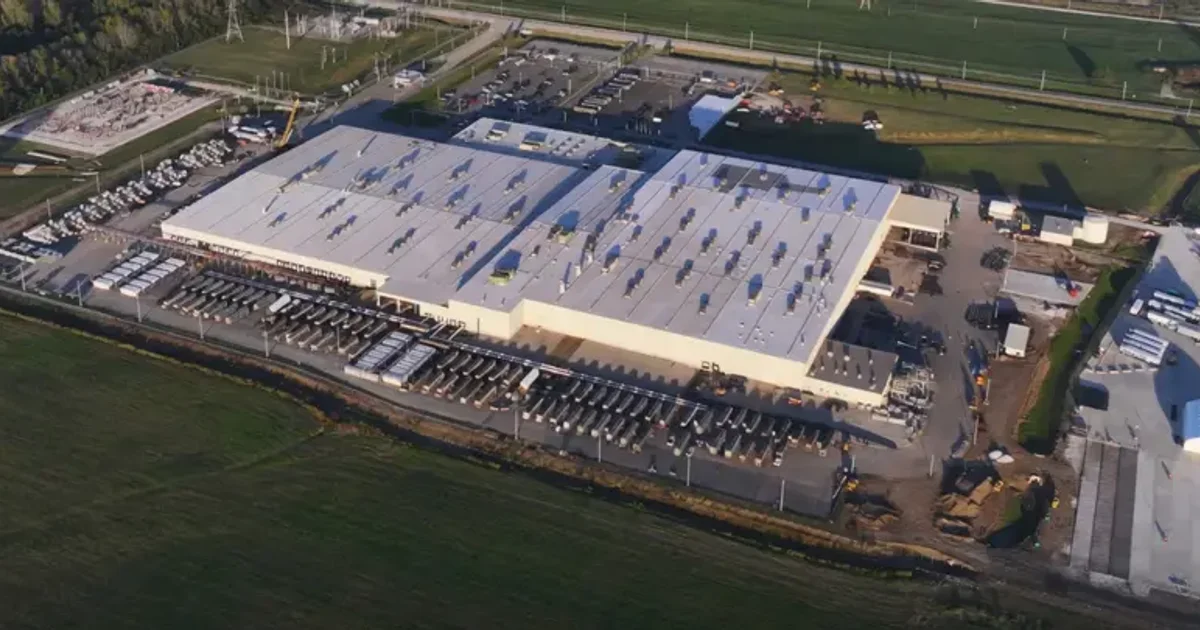
SpaceX’s compute lease with Reflection AI took effect on July 1, 2026, making the startup the fourth major tenant at Colossus, after Anthropic, Google, and Cursor. Reflection AI pays $150 million a month for access to Nvidia GB300 chips, on a contract running through the end of 2029, worth up to $6.3 billion if it runs full term.
Here’s the number I’d actually watch: not the $6.3 billion headline, but the exit clause buried in the contract terms. Either party can walk away with 90 days’ notice once the initial three-month period ends. If Reflection AI’s Department of Energy Genesis Mission or Pentagon pipeline were as solid as the company’s positioning suggests, that kind of escape hatch wouldn’t need to exist. That’s my read after going through the public filings and reporting. If you’ve seen the actual government contract language, I’d like to be proven wrong.
A Fourth Tenant Moves Into Colossus
Under the deal, Reflection AI pays SpaceX $150 million monthly for GB300 chips housed at the Colossus 2 facility near Memphis, Tennessee, running from July 2026 through the end of 2029 for a total contract value of roughly $6.3 billion. DataCenterDynamics reports the agreement carries a 90-day exit clause exercisable by either side after the first quarter.
The tenant list at Colossus keeps growing. Anthropic pays $1.25 billion a month for roughly 220,000 GPUs on a contract running through May 2029. Google pays $920 million a month for about 110,000 GPUs through June 2029. SpaceX also acquired coding tool Cursor for $60 billion in June, another customer riding on the same infrastructure. Add Reflection AI’s $150 million, and the three compute leases alone bring in roughly $2.32 billion a month, an annualized run rate near $28 billion. CryptoBriefing’s analysis puts that scale ahead of the revenue implied by rival neocloud CoreWeave’s roughly $60 billion valuation.
Who Is Reflection AI
Reflection AI was founded in early 2024 by two DeepMind veterans. Misha Laskin led reward modeling for the Gemini project, and Ioannis Antonoglou was DeepMind’s sixth employee and a co-creator of AlphaGo. The company brands itself as “America’s open frontier lab,” planning to publish model weights while keeping training data and pipelines proprietary, and it is chasing government and national-security customers tied to the Department of Energy’s Genesis Mission and Pentagon AI programs.
The funding trajectory is the most striking part of the story. Reflection AI was valued at $545 million in March 2025. A $2 billion round led by Nvidia in October 2025 pushed that to $8 billion. Forbes reports the company is now in talks for a new round targeting roughly $20 billion, a roughly 37x increase in a little over a year. Through all of it, Reflection AI has yet to ship a publicly available frontier model or product.
What the Numbers Actually Say
Start with a rough per-GPU price check. Anthropic’s $1.25 billion a month for 220,000 GPUs works out to about $5,682 per GPU per month. Google’s $920 million for 110,000 GPUs works out to about $8,364 per GPU per month. Apply that range to Reflection AI’s $150 million monthly payment, and the startup is likely renting somewhere between 18,000 and 26,000 GB300s, a full order of magnitude smaller than what its Colossus neighbors are running.
Nvidia’s role in this deal is worth a second look. Nvidia led Reflection AI’s $2 billion round last October, and Reflection AI is now using that capital, routed through SpaceX, to rent Nvidia’s own GB300 chips. Money leaves Nvidia, circles back as chip rental revenue. This kind of round-trip financing has become routine across 2026’s AI infrastructure deals, and every additional instance makes it harder for outside investors to separate genuine demand from vendor-financed demand.
Scale that $150 million monthly figure up, and Reflection AI is committing to roughly $1.8 billion a year in compute spend, for a company with no public revenue to speak of. Short-seller Michael Burry has publicly argued that AI capital spending is dangerously concentrated among a handful of hyperscalers, and that a slowdown anywhere in that chain would force a broad repricing. A pre-product lab locking in ten-figure compute commitments before shipping a model is close to the exact risk profile Burry has been flagging.
There’s also an engineering detail that’s easy to skip past. Colossus 2 was marketed as having 1GW of capacity at launch, but DataCenterDynamics cites satellite imagery suggesting the actual cooling infrastructure supports closer to 350MW, with 19 natural gas turbines added by May 2026 to close the power gap. With Anthropic’s 220,000 GPUs and Google’s 110,000 already queued ahead of it, whether Reflection AI’s new GB300 allocation actually shows up on schedule and at full capacity is an open engineering question, not a settled fact.
Metrics Worth Watching
The first is product delivery: whether Reflection AI ships a testable model or API within the next three to six months to justify $1.8 billion a year in compute spend. Without something to show, this contract starts looking like pure stockpiling.
The second is whether the 90-day exit clause gets exercised. The initial three-month window closes around October 2026, and either side backing out then would be a real signal about how the deal is actually performing.
The third is whether SpaceX’s first post-IPO quarterly disclosure breaks out Anthropic, Google, and Reflection AI’s compute leases as a distinct revenue line, giving the market an official annualized figure instead of one stitched together from press reports.
The fourth is Colossus 2’s actual delivered power capacity, and whether the pace of turbine installation can keep up with four tenants competing for the same GPUs at once.
If this was useful, subscribe to the newsletter for weekly AI PM insights and GenAI case studies.
Related reading:
Related Articles
NVIDIA Backs OpenAI’s Ohio Data Center With Up to $105 Billion: Power and Credit Risk Come First
NVIDIA will provide credit support and exclusive AI compute at PORTS-Pike under a 20-year OpenAI lease, but the $105 billion figure is a guarantee ceiling, not capital already spent.
Google Is Paying SpaceX $920M a Month for AI Compute
Google's Gemini Enterprise hit demand it couldn't handle in-house, forcing a near-$1B-per-month deal with SpaceX's xAI-absorbed infrastructure. What this reveals about the true severity of AI compute scarcity.