Meta Plans to Rent Out Excess AI Compute as a Cloud Business, Stock Jumps 10%
TL;DR
Meta 傳出正籌組雲端事業,準備把訓練用剩的 AI 運算力租給企業客戶,消息一出股價單日暴漲逾一成。今年資本支出上看 1450 億美元的 Meta,究竟是要當第四家超大規模雲端商,還是只想把沉沒成本轉正?
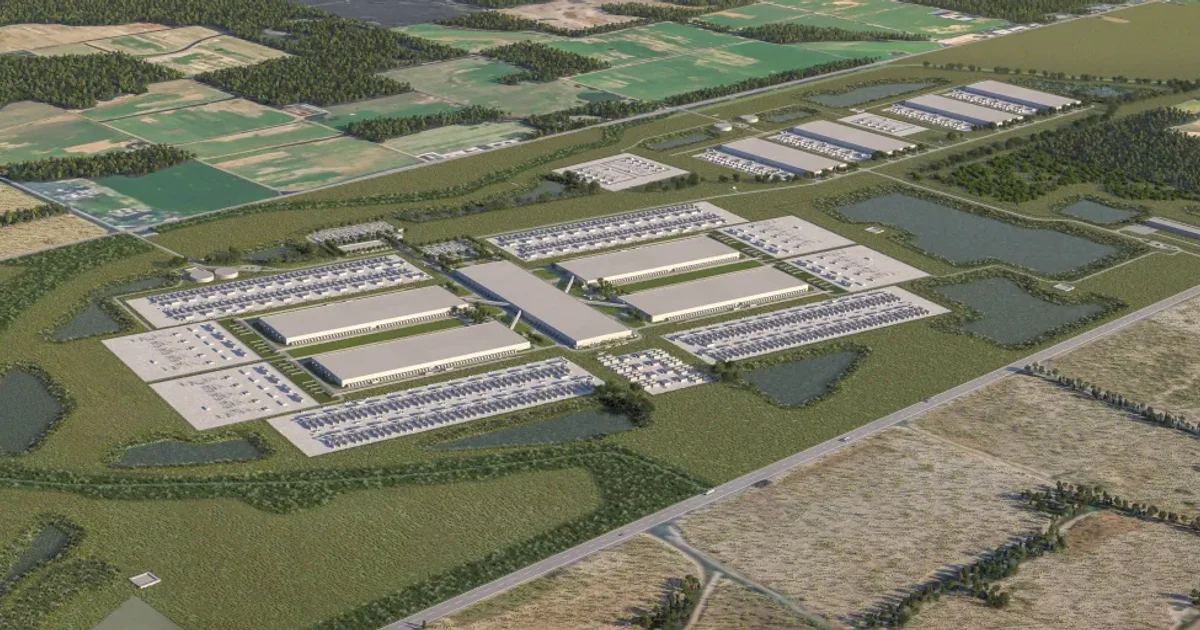
Meta is quietly assembling a new business: renting out the AI compute it isn’t using for training to outside customers, putting it in direct competition with AWS, Azure, and Google Cloud. Bloomberg reported on July 1, citing people familiar with the matter, that an internal unit called “Meta Compute,” formed back in January, is now weighing whether to sell access to hosted models or sell raw bare-metal capacity. The stock jumped more than 10% the day the news broke, clawing back most of a roughly 15% year-to-date decline in a single session.
Here’s a number you can check yourself. Take Meta’s latest 2026 capex guidance of $125-145 billion and divide it by an annualized revenue estimate of $225.2 billion, derived from multiplying Q1’s $56.3 billion by four. That works out to a capex-to-revenue ratio hovering around 60%. Pull the latest quarter’s numbers from Meta’s investor relations page and run it yourself. If your figure lands more than ten percentage points off mine, one of us is probably using a different revenue baseline, and I’d genuinely like to know which.
Meta Compute: a new unit that hasn’t decided whether to sell models or bare metal
The unit is jointly steered by infrastructure chief Santosh Janardhan, Daniel Gross of Meta Superintelligence Labs, and company president Dina Powell McCormick. The Next Web’s reporting describes two paths under evaluation: selling model access, similar to Amazon Bedrock, or selling raw compute capacity, the model used by neocloud providers like CoreWeave. As of now, Meta hasn’t confirmed pricing or a launch timeline for either option; the entire plan still rests on anonymous Bloomberg sourcing.
Meta’s underlying capacity isn’t small. Its Hyperion campus in Louisiana spans 2,250 acres with 4 million square feet of planned floor space, built out to eventually support up to 5GW of power. Add to that a deal signed earlier this year with Crusoe spanning two sites, Childress, Texas, and Warrenton, Missouri, totaling roughly 1.6GW, and CryptoBriefing’s coverage describes it as a meaningful chunk of Crusoe’s entire contracted portfolio. The capacity is already built. The question is what to do with what’s left over.
Two business models, two different sets of competitors
Selling model access puts Meta up against AWS Bedrock and Azure AI Foundry, where the fight is over breadth of model lineup and enterprise tooling maturity. Selling bare-metal capacity puts it up against CoreWeave, Nebius, Lambda, and Vultr, where the fight comes down to power and chip costs. Fierce Network cites analyst Sid Nag of Tekonyx, who argues the market can support “a fourth hyperscaler” but “not a fourth full-stack cloud.” His read is that Meta’s more realistic path is targeting customers with heavy training workloads and sovereign-deployment needs through bare-metal infrastructure, rather than trying to match the big three’s full software stack.
What the numbers actually say
Meta’s capex guidance was already raised once this year, on the Q1 earnings call on April 29, from $115-135 billion to $125-145 billion. CNBC’s report at the time noted the stock fell that day, as investors worried the spending pace was outrunning returns. Three months later, the same investors reacted in the opposite direction to the cloud business rumor, sending the stock up more than 10%. CNBC’s follow-up report frames it as the market finally getting a signal that this spending won’t all become sunk cost. Same capex number, opposite reaction three months apart. The only thing that changed was whether investors could see a monetization path.
The comparison to SpaceX’s Colossus data center is instructive. By renting out idle capacity to tenants including Anthropic, Google, Cursor, and Reflection AI, Bloomberg Intelligence estimates SpaceX’s external rental business could generate over $50 billion in revenue by 2028 and $100 billion by 2030. Meta alone will spend $125-145 billion in 2026 just building its own capacity, meaning a single year of construction spend approaches the revenue ceiling SpaceX’s side business is projected to hit four years from now. The difference is that SpaceX’s playbook has been running for close to a year already; Meta is still deciding on a business model. What Meta is behind on isn’t capital, it’s time.
There’s an engineering constraint worth flagging too. Data center capacity comes online in whole buildings and campuses, not incrementally as components get added, which means surplus capacity shows up structurally at some point regardless of how aggressively a company expands. That’s a function of how the capacity is built, not a planning failure. The real variable is on the sales side: AWS and Azure spent over a decade building enterprise procurement relationships and billing infrastructure. Meta has never run a paying external cloud customer base. How fast it can build that muscle is an organizational question, not a compute-scale one.
Metrics worth watching next
First, Meta’s Q2 earnings call, expected late July, where management would need to formally acknowledge Meta Compute and give some indication of product shape or pricing, rather than leaving the public to piece it together from anonymous sourcing.
Second, whether Meta starts publicly recruiting an enterprise cloud sales organization. That’s the most direct signal of whether this business is real, since bare-metal compute sales require a completely different go-to-market motion than Meta’s ad-sales-driven history.
Third, whether CoreWeave and Nebius see their stock prices or analyst ratings shift in response to a potential new entrant. How the market prices the long-term winner of this competition will show up in those valuation multiples.
Fourth, whether Meta’s future earnings reports or calls start disclosing actual utilization rates for Hyperion and the Crusoe capacity. That’s the number that would finally confirm whether the idle capacity is as large as the rumors suggest.
If this was useful, subscribe to the newsletter for weekly AI PM insights and GenAI case studies.
Related reading:
Related Articles
Akamai Wins Anthropic Cloud Deal: CPU Capacity Requires Spending First
Anthropic commits to $11.6 billion of cloud services over seven years, with Akamai estimating $5.5 billion in capital spending. CPU demand has a named buyer, but delivery and revenue still lie ahead.
Google Sends TPUs Into Orbit: A 15-Minute Test Is Not Continuous Compute
Google and Planet launch a Suncatcher prototype to test Gemma on four TPUs. Orbital hardware enables thermal and radiation testing, but cooling intervals, sustained compute and commercial costs remain unresolved.