蘋果控告OpenAI竊取商業機密:AI硬體野心踩到紅線
TL;DR
蘋果7月10日在加州北區聯邦法院控告OpenAI竊取商業機密,指控前蘋果員工帶實體零件進面試、離職後下載機密檔案。這場官司真的能擋下OpenAI年底的硬體發表嗎?
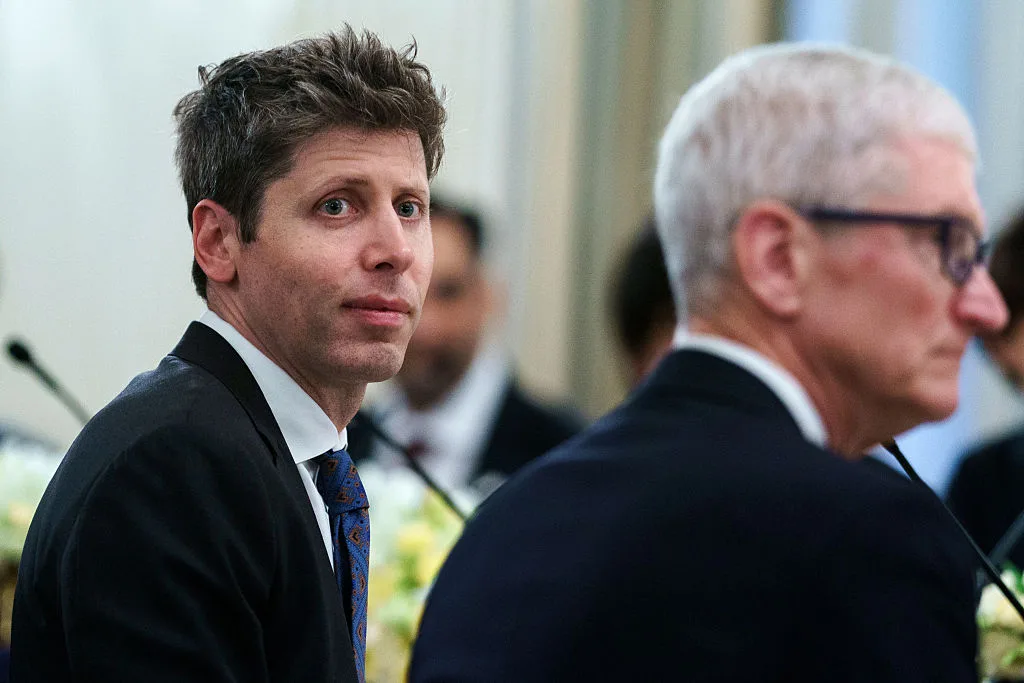
Apple filed suit in federal court in the Northern District of California on July 10, naming OpenAI itself plus two former Apple employees as defendants, and accusing them of stealing trade secrets. The complaint says OpenAI’s hardware business is “rotten to its core,” language that rarely shows up in corporate litigation.
Here’s my read: this case most likely follows the path Waymo v. Uber took in 2017. That self-driving trade secret fight dragged on for more than a year and ended with Uber paying $245 million to settle, but Uber’s self-driving unit kept running through several leadership changes without the litigation ever stopping the work. Injunctions that freeze a product line outright are rare before evidence gets aired in discovery. My guess is OpenAI’s rumored hardware device still ships on schedule late this year, with a settlement line item added to the balance sheet somewhere down the road. If you’ve got a stronger injunction precedent that argues otherwise, I’d like to hear it.
What Happened
The suit was filed in the Northern District of California, naming OpenAI as a company along with two individuals. One is Tang Tan, OpenAI’s current chief hardware officer and a former Apple vice president. The other is Chang Liu, a former senior Apple electrical engineer. Apple’s allegations get specific: Tan is accused of directing current Apple employees interviewing at OpenAI to bring “actual parts” to show-and-tell style sessions, while Liu allegedly exploited a gap in Apple’s cloud access controls after leaving to download dozens of confidential hardware files. The complaint also states Apple has gathered significant evidence showing OpenAI employees systematically took unreleased Apple technology, processes, and product information.
The two companies weren’t always adversaries. In 2024, Apple and OpenAI signed a deal integrating ChatGPT into Siri, and industry watchers wondered whether that partnership would help Apple close its own AI gap. The relationship soured after OpenAI spent roughly $6.5 billion last year acquiring io Products, the hardware design firm founded by former Apple design chief Jony Ive, marking its formal entry into consumer devices with a physical AI gadget reportedly planned for later this year. Ive himself isn’t named as a defendant and the complaint doesn’t accuse him of wrongdoing, but io Products as a company is named in the trade secret claims. OpenAI’s public response was brief: a spokesperson said the company has no interest in other companies’ trade secrets and remains focused on building technology that actually helps people.
What the Numbers Actually Mean
One figure in Apple’s complaint deserves a second look: more than 400 former Apple employees currently work at OpenAI. That number sounds alarming on its own, but it means more once it’s put in context. OpenAI’s total headcount is estimated somewhere between 8,000 and 10,000 employees, which puts 400 ex-Apple hires at roughly 4% to 5% of the workforce. For a company that built its reputation on software models and only seriously entered hardware last year, that’s a notably concentrated pipeline. It suggests Apple engineering talent was one of the primary building blocks of OpenAI’s hardware team, not a handful of scattered individual departures.
Here’s where it gets easy to conflate two different things. California law bans non-compete clauses, so employees leaving for a competitor is completely legal, and OpenAI hiring 400 people away from Apple isn’t, on its own, a crime. What Apple is suing over is specific conduct: bringing parts to interviews, downloading confidential files, coaching departing staff on which materials to study before they leave. If those allegations hold up, they’re a different category of legal exposure than ordinary job-hopping, which is exactly why the complaint spends so much space on individual incidents rather than the hiring pattern itself.
The Waymo v. Uber case is worth pulling apart as a reference point. Uber had acquired self-driving startup Otto, whose founder Anthony Levandowski was accused of taking tens of thousands of confidential files from Google. That case ran more than a year, drew a parallel criminal investigation, and ended with Levandowski convicted. Throughout the process, no court issued an injunction forcing Uber to halt its self-driving research. Uber’s autonomous vehicle unit kept operating until it was sold off in 2020 for unrelated business reasons, largely independent of the lawsuit’s outcome. Apply that same logic to OpenAI: unless Apple can present evidence strong enough to convince a judge to grant a preliminary injunction, OpenAI’s device timeline probably doesn’t change because of this filing. The real leverage sits in discovery. Once OpenAI’s hardware roadmap and internal communications get forced into the open, that’s where outsiders actually learn something concrete about the company’s device ambitions.
Metrics Worth Watching Next
A few things are worth tracking as this case moves forward. First, whether Apple files for a preliminary injunction. That’s currently the only mechanism that could affect OpenAI’s hardware timeline before a verdict, and if Apple keeps not filing for one, that itself signals the company doesn’t think its evidence is strong enough yet to convince a judge to act immediately. Second, the case management conference schedule. Cases like this typically set a discovery timeline early on, and that timeline gives a rough sense of how long the whole fight will run. Third, whether additional defendants get added. Apple’s engineering talent has flowed heavily to Google and Meta in recent years too, and if this suit succeeds or produces a favorable settlement, the odds aren’t low that Apple tries the same playbook elsewhere. Finally, watch whether OpenAI’s official timeline for its year-end device launch shows any sign of slipping. That would be the most direct market signal of how much real damage this lawsuit is doing.
If this was useful, subscribe to the newsletter for weekly AI PM insights and GenAI case studies.
Sources: Bloomberg, TechCrunch, CNBC
Related reading:
Related Articles
OpenAI Launches Dots: Ongoing Work Should Not Become a Growing Review Queue
OpenAI is rolling out dots to eligible paid users for work that continues between conversations. Read-only background research and limited memory controls make missed commitments and accumulated review work more useful tests than activity alone.
GPT-6 Sol and Luna Cut Prices: Long-Task Savings Depend on What Gets Reused
OpenAI launches GPT-6 Sol and Luna with input prices 50% below prior promotional rates. Cached reads bring further discounts, but writes, retries and changing information still affect the total bill.