Xi Jinping Opens WAIC 2026 as China Launches 29-Nation AI Bloc
TL;DR
Xi Jinping made his first in-person appearance at Shanghai World AI Conference as 29 countries signed on to launch a China-led AI governance body. I ran the numbers on what that bloc actually represents.
Here’s a testable claim: the new China-led AI governance body that just got 29 signatures is more diplomatic leverage than a real counterweight to US-EU AI standards, because the combined economic and compute weight of its members is small. Xi Jinping walked onto the stage at the World AI Conference opening ceremony in Shanghai today and delivered the keynote himself, the first time a Chinese head of state has done so in the event’s eight-year run. If you have harder data on these 29 economies’ compute capacity or GDP figures than what I worked out below, I’d like to see where my estimate is off.
What happened: Xi’s first WAIC keynote, and a bloc signed a day early
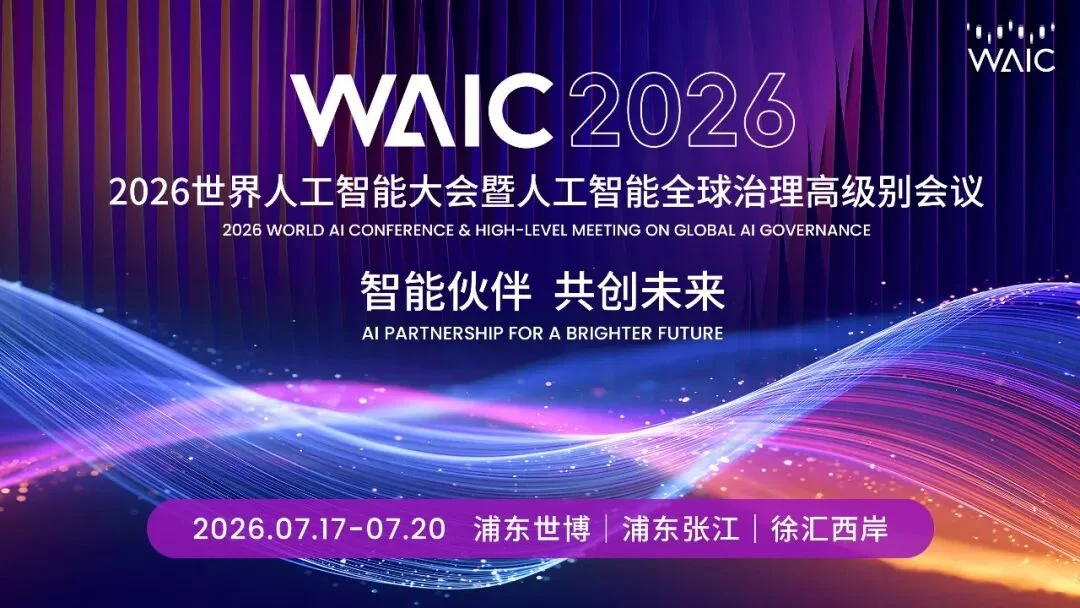
The 2026 World AI Conference and High-Level Meeting on Global AI Governance opened in Shanghai on July 17 and runs through July 20, under the theme “Intelligent Partners, Co-create the Future.” The official figures are more than 140 forums, roughly 1,400 guests, 1,100 exhibitors, and over 300 products making their global debut on-site. Xi attended the opening ceremony and delivered the keynote address; Foreign Ministry spokesperson Lin Jian said he would “systematically elaborate on China’s policies, positions, visions and propositions on AI development and governance.” It’s Xi’s first personal appearance at the conference since it launched in 2018.
The more consequential move came a day earlier. On July 16, 29 countries, including Russia, Belarus, Serbia, Cuba, Brazil, and Venezuela, plus 10 African and 12 Asian nations, signed an agreement establishing the World AI Cooperation Organization (WAICO), headquartered in Shanghai. China first floated the idea back in July 2025; this is the moment it turned into an intergovernmental body with a charter and a street address.
The number behind the headline: 29 countries sounds like a lot. Does it weigh a lot?
Twenty-nine signatories sounds like a broad coalition until you read the list closely. No G7 member is on it. No core EU state either. Neither is India, Japan, or South Korea, the three Asian economies that actually carry meaningful AI compute capacity. Run a rough Fermi estimate: Russia and Brazil alone account for something like $4.5 trillion in combined nominal GDP. The rest, Belarus, Serbia, Cuba, Venezuela, plus 22 African and Asian states, are mostly small and mid-sized economies; even generously summed, they probably don’t clear another $2 trillion. Add it up and the bloc likely represents somewhere around 5-6% of global GDP, before you even get to the harder constraint: AI chips and cloud compute. A single US hyperscaler’s annual capex can exceed the combined GDP of several WAICO member states.
That makes WAICO, at this stage, look more like a diplomatic instrument for securing a seat at the table on AI governance among Global South nations, a mirror image of the US-aligned coalition Sam Altman, Dario Amodei, and Demis Hassabis called for when they appeared together at the G7 summit in June. The variables that actually determine where AI governance goes, chip export controls and cross-border model licensing policy in the US and China, remain entirely outside WAICO’s reach for now.
For WAICO to move from paper to an organization with real teeth, the next three to six months should produce concrete technical standards or interoperability specifications, a staffed secretariat with an actual budget, and, most tellingly, at least one G20 member signing on. Right now, all three are blank.
Metrics worth watching next
Whether WAICO actually stands up a secretariat and an annual budget is the first test of whether it can function as more than a signing ceremony. Whether a larger economy, say Indonesia, Saudi Arabia, or South Africa, adds its signature during the conference window will determine whether this bloc can graduate from a small-states club into something with real parallel weight. What specific position Xi’s keynote takes on chip export controls or model licensing, versus generic cooperation language, is worth reading closely. Whether the US and EU cite WAICO’s formation as a reason to accelerate their own AI governance coalition is a countermove worth tracking over the coming weeks. And whether Shanghai’s local AI investment deals with WAICO member states translate into actual technology transfer or investment agreements is the most direct test of whether this organization is more than symbolic.
If this was useful, subscribe to the newsletter for weekly AI PM insights and GenAI case studies.
Sources: The State Council of China, South China Morning Post, CNBC Africa, CGTN
Related reading:
Related Articles
UN Opens First-Ever AI Governance Dialogue: 193 Nations Meet in Geneva as Scientists Warn "Safety Cannot Be Guaranteed"
The UN's first-ever Global Dialogue on AI Governance opened today in Geneva with 193 member states, alongside a scientific panel report claiming AI task complexity doubles every 4 to 7 months. The measurement conditions behind that number matter more than the headline.
AI Safety Index Summer 2026: Anthropic Tops the Field With Just a C+
The Future of Life Institute released its Summer 2026 AI Safety Index. Anthropic scored the highest grade among nine companies, a C+. Half the evidence comes from a company self-report survey. Here is how much that should discount the headline number.