Google Gets a $12.2 Billion Marvell Warrant—Full Vesting Requires $120 Billion in Chip Purchases
TL;DR
Marvell gave Google the right to buy nearly 59 million shares at $206.58 each; most shares vest in stages through purchases, so $12.2 billion is not an investment already made.
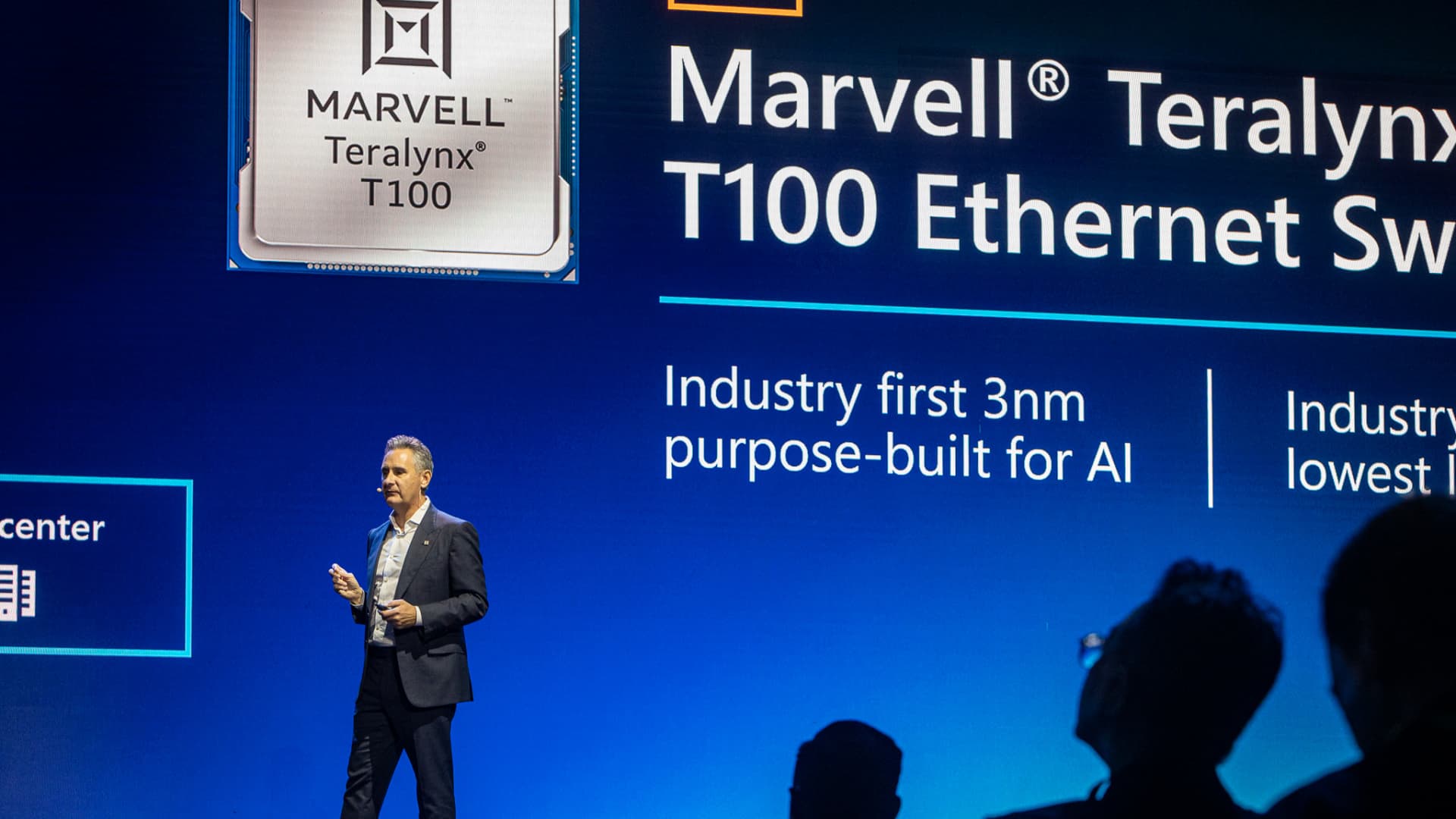
This agreement can be tested with one operating number. If Marvell Technology does not accumulate enough custom-chip revenue to vest most of the warrant, Google’s 58,970,907 shares will never all become exercisable. Over the next three to six months, the useful disclosures will be purchases attributed to Google and the number of vested shares. Treating the headline value as cash already invested would overstate the transaction today.
Marvell Technology issued the warrant to Google on August 18, 2026. It gives Google the right to buy as many as 58,970,907 shares at $206.58 per share and expires on August 18, 2033. Multiplying the share count by the exercise price produces about $12.18 billion, rounded to the $12.2 billion figure used in coverage. Google must still pay the exercise price after shares vest. The amount is therefore neither revenue already received by Marvell nor an equity investment already completed by Google.
The 240 vesting tranches are tied to purchases
Only 1,360,867 shares vest in equal quarterly installments during the first year after the commercial agreement and warrant were signed. The remaining shares vest from Marvell’s third quarter of fiscal 2027 through the end of fiscal 2033 according to discretionary purchases by Google and its affiliates. The filing divides that portion into 240 equal tranches, with one tranche vesting for every $500 million in custom-products revenue.
The arithmetic sets a demanding threshold: 240 multiplied by $500 million equals $120 billion. That is the revenue needed for all purchase-based tranches to vest under the disclosed formula. It is not a promise by Google to spend $120 billion. The filing calls the purchases discretionary and does not disclose product-level prices, committed volumes, margins, or the amount already ordered.
The companies signed their commercial agreement on July 29. Its scope includes AI inference accelerators, storage controllers, network-interface controllers, memory-interface controllers, and near-memory computing products that attach to Google’s TPU ecosystem. This is broader than replacing one Nvidia GPU with another accelerator. It covers several components responsible for moving data among compute, memory, storage, and networking inside an AI system.
A market reaction does not remove the execution conditions
CNBC reported that Marvell shares rallied nearly 10% after the filing, while Broadcom, Google’s longstanding custom-chip partner, fell about 5%. Those moves show investors reallocating expectations about future orders. They do not establish how much business will shift, when products will ship, or what margin Marvell will earn. Google can still determine its purchasing pace through 2033, while dilution for Marvell shareholders depends on the number of shares that actually vest and are exercised.
Three disclosures would make the agreement assessable over the coming quarters: Marvell’s custom-products revenue, the cumulative number of vested warrant shares, and customer concentration linked to Google. Rising revenue accompanied by falling gross margin could indicate that Marvell is trading price for scale. Little change in vested shares would show that the $12.2 billion amount remains primarily a ceiling. These measures will reveal a TPU supply-chain shift earlier and more reliably than the warrant’s headline value.
Sources:
Related Articles
Google Sends TPUs Into Orbit: A 15-Minute Test Is Not Continuous Compute
Google and Planet launch a Suncatcher prototype to test Gemma on four TPUs. Orbital hardware enables thermal and radiation testing, but cooling intervals, sustained compute and commercial costs remain unresolved.
Google Unveils Gemini 4 Argon: Code Modernization Needs the Right Baseline
Gemini 4 Argon raises the output limit to 1M tokens, initially for trusted cyber defenders. Its libgav1 example shows iterative improvement of a Rust port, but the 2.7-fold speedup is not measured against the optimized C++ original.