Reflection AI has previewed its first model, Beam, with adjustable reasoning effort. What remains missing is a comparison of actual code delivery across settings. Producing less reasoning text is useful if changes still pass the same acceptance criteria on the first attempt. A shorter wait accompanied by more omissions leaves users to recover the missed dependencies.Reasoning settings
The announcement is dated 2026-10-05 without a time or timezone. Semafor displays October 5 at 15:01 EDT, corresponding to October 6 at 03:01 in Taipei. This article is dated October 6 in Taipei, with a research cutoff of 09:01. It conservatively uses the previous day’s announcement within the 48-hour window; today’s reporting timestamp does not establish when model access opened.Announcement Reporting time
Beam has 501B total parameters and about 23B active per token in a mixture-of-experts architecture for coding and agents. MarkTechPost summarizes the vendor’s specifications and evaluations, not an independent retest. Access is limited to a waitlist and selected early users; Apache 2.0 weights are planned later this month, not available for general deployment now.Specifications and availability
The company claims roughly one-quarter to one-third of the compute for results near GLM-5.2 on certain advanced reasoning tests. That vendor comparison does not establish faster completion of every kind of work.Performance claim
Reflection rewards successful solutions while penalizing unnecessary tokens; users can adjust reasoning effort. Its live New York subway map demonstration uses public data, but is not a long-term customer outcome.Training and demonstration This offers product teams a concrete interaction to investigate. A successful demonstration does not establish how often a different set of requests would succeed.
Match reasoning effort to the reach of a change
I would use the setting to distinguish kinds of work rather than default every request to maximum effort. Suppose an agent needs to modify one isolated function with comprehensive tests. If shorter reasoning delivers the same result, the user can continue sooner. A change to data formats across several services may require tracing callers and exceptional cases, giving additional waiting time a plausible purpose. This is a product choice inferred from differences between tasks, not a reported Beam customer case.
Users should not have to guess the setting unaided. A coding interface could show its current reasoning effort and explain which requests cause an increase. If a low-effort result fails tests and the system retries with more effort, it should retain the reason for failure instead of counting each retry as a fresh success. Conversely, if a higher setting does not reduce the same errors, generating more reasoning lacks support. The requirements or tests themselves may be the problem.
Semafor reports that Reflection targets organizations seeking control over their models.Intended users For those teams, eventual access to weights could mean keeping a validated version and deciding how much reasoning different jobs receive. Model selection still depends on the work. Development location and total parameter count cannot substitute for acceptance testing of the code.
Compute estimates do not establish waiting time
Reflection’s efficiency estimates omit prompt prefill, context-dependent attention and serving overhead.Estimation limits The chart therefore cannot directly establish how much faster a product will feel. Include time spent reading the request, awaiting tools and retrying failures to approach the user’s wait from submission to a usable change.
Beam currently adds a candidate with a defined technical direction; public weights and deployment outcomes remain to be confirmed. I favor preserving task-dependent reasoning controls without treating shorter output as universally better. When comparable changes under the same tests retain their first-attempt acceptance rate and arrive sooner, there is sufficient reason to lower the default effort for that class of work.
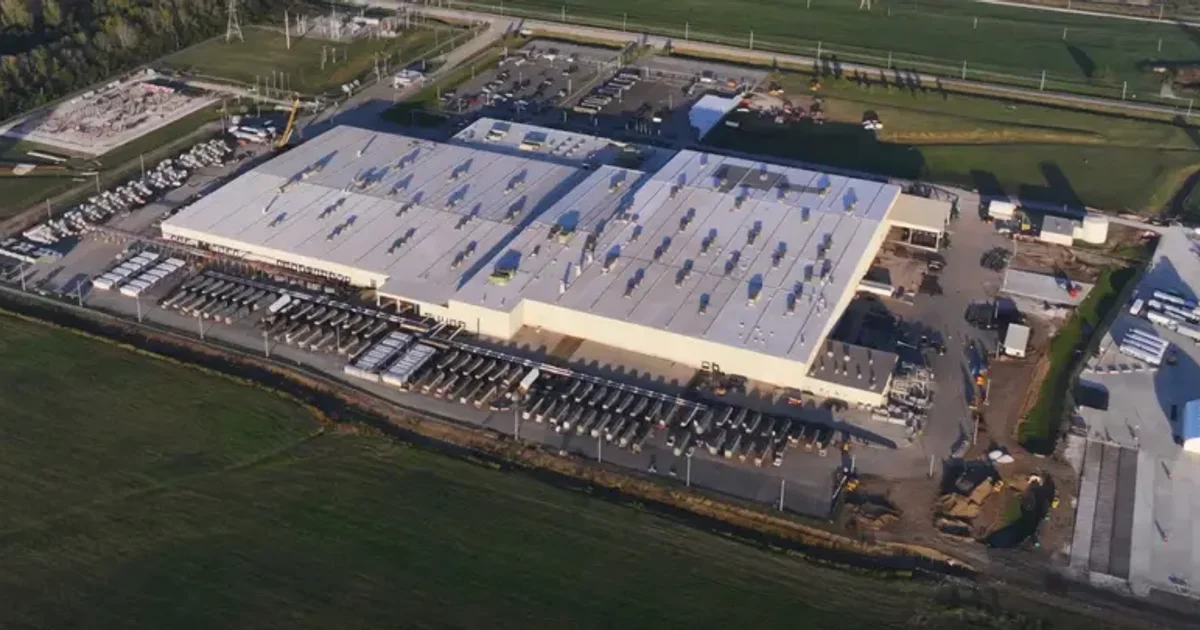
The cover reuses the data-center photograph from this site’s Reflection compute-contract article. It is not the Beam interface or a photograph of this announcement. Downloading the official image failed because DNS resolution was unavailable.
Sources: