ASML has raised the lower end of its annual revenue outlook while saying planned supply will still fall short of customer demand in 2027 and 2028. The results support strong demand for AI chipmaking equipment, but do not establish that compute shortages are about to ease. Unless subsequent deliveries and customers’ usable capacity increase together, revenue growth is not evidence that expansion is complete.Results Independent reporting
Both the event and this article are dated 2026-10-14. The syndicated company release shows 01:00 EDT, equivalent to 13:00 in Taipei; this article’s research cutoff is 15:50 Taipei time. The Reuters brief was updated at 05:17 UTC, also before the cutoff. These are newly announced third-quarter results and an updated outlook; this article does not draw on the investor call scheduled for later in the day.Release timestamp Reporting timestamp
Third-quarter revenue was approximately €11.7 billion, net income approximately €5.0 billion, and gross margin 57.5%. ASML forecasts fourth-quarter revenue of €14.2 billion to €15.2 billion and narrows its annual range from €43–45 billion to €44–45 billion. The lower end rises; the upper end does not change. Forecast revenue must not be described as already realized.Current figures Previous outlook
Chief executive Christophe Fouquet says customers keep increasing equipment demand on expectations of AI investment. Some have expressed interest in placing orders for 2029 and 2030. Reuters identifies TSMC, Intel, and Samsung among ASML’s customers. This directly concerns Taiwan’s manufacturing supply, but the announcement does not allocate equipment among customers. Aggregate demand cannot establish TSMC’s delivery schedule, and ordering interest is not yet a signed long-term order.Demand and customers Status of interest
Existing-tool upgrades generate revenue while new tools wait
ASML says Installed Base Management revenue reached approximately €3.3 billion, exceeding expectations because of demand for productivity upgrades and also lifting gross margin. This business includes services and field upgrade options; its entire revenue cannot be treated as pure software sales. These effects are already reflected in the quarter, distinct from preparations to expand future shipment capacity.Operating explanation
I regard the upgrade business as the more direct product evidence in these results: customers are buying improvements to installed equipment, so not all growth must await delivery of a new machine. For equipment and industrial-software teams, this suggests a specific area of demand. Helping customers improve existing assets may address immediate constraints sooner than simply offering additional new-machine options.
Revenue records the company’s sales performance. The results do not provide the actual additional output these upgrades delivered at customer sites, nor enough information to translate ASML’s margin improvement into lower customer unit costs. Assessing how much upgrades ease capacity constraints requires data on the relevant equipment, output, and downtime. A supplier’s higher margin cannot stand in for a customer’s higher manufacturing efficiency.
The 2028 supply ambition still needs delivery
ASML is investigating ways to increase 2028 capacity beyond the previously announced 30% expansion. A release footnote says that earlier plan concerned low-NA EUV and immersion DUV. Today’s new assessment is that planned supply is insufficient and further expansion must be explored; it is not a completed capacity increase.Plan status I would interpret expansion commitments separately from delivery outcomes. Equipment orders can show a willingness to invest, but cannot directly establish how many AI chips will be available in a particular quarter. These results alone are also insufficient to estimate cloud inference prices.
Expansion also faces a timing constraint. Reuters reports that the first phase of the Eindhoven expansion, where construction began last month, will only be ready in 2029. ASML therefore needs other ways to meet earlier demand.Construction timeline Upgrading existing tools can be useful during this wait, but there is not yet enough evidence that it can close the entire gap.
The raised outlook gives equipment suppliers more reason to invest in capacity, while improvements to installed machines already have realized revenue behind them. The next outcomes I would watch are whether additional tools arrive on schedule and how much usable output upgrades add. The former determines when expansion happens; the latter determines what can improve while customers wait. Both are closer to actual AI chip supply than purchasing intentions alone.
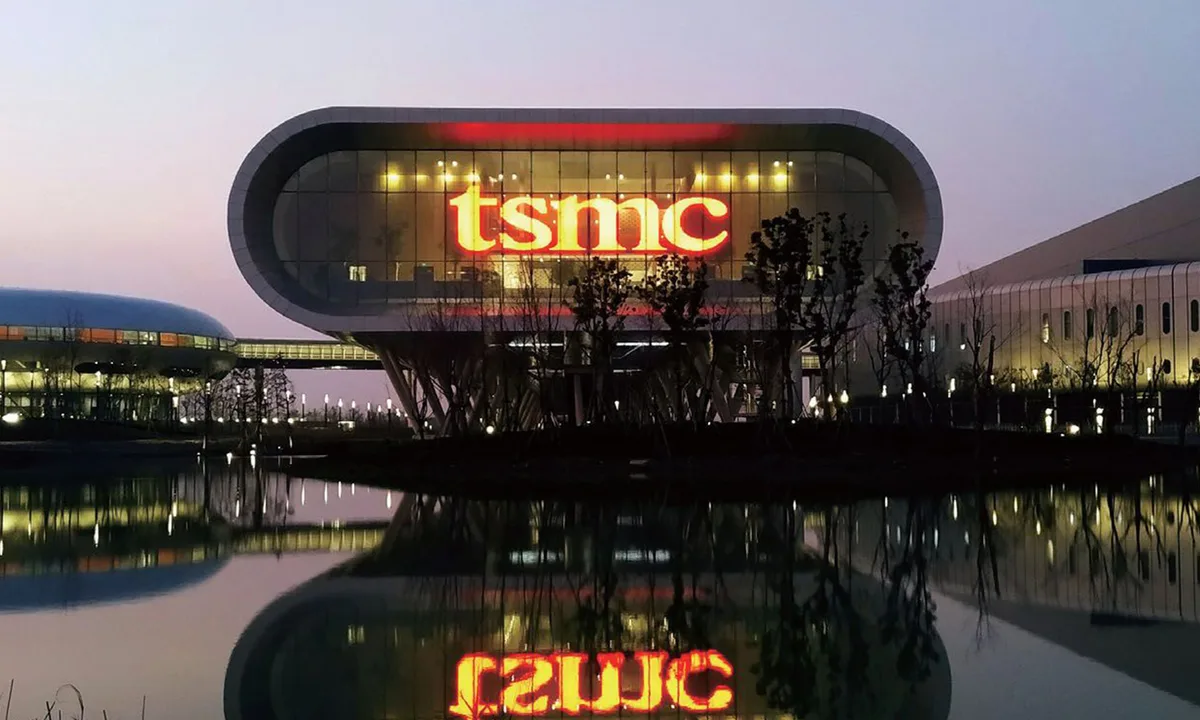
The cover reuses the site’s TSMC facility photograph to illustrate a manufacturing customer of ASML. It does not depict an ASML factory or this results announcement. Reporting images could not be downloaded because DNS resolution failed.
Sources: