Just three days after launch, the US Commerce Department issued an export control directive forcing Anthropic to take Claude Fable 5 and Mythos 5 offline globally. The trigger: a Unicode homoglyph jailbreak demonstration that leaked a 120,000-character system prompt.
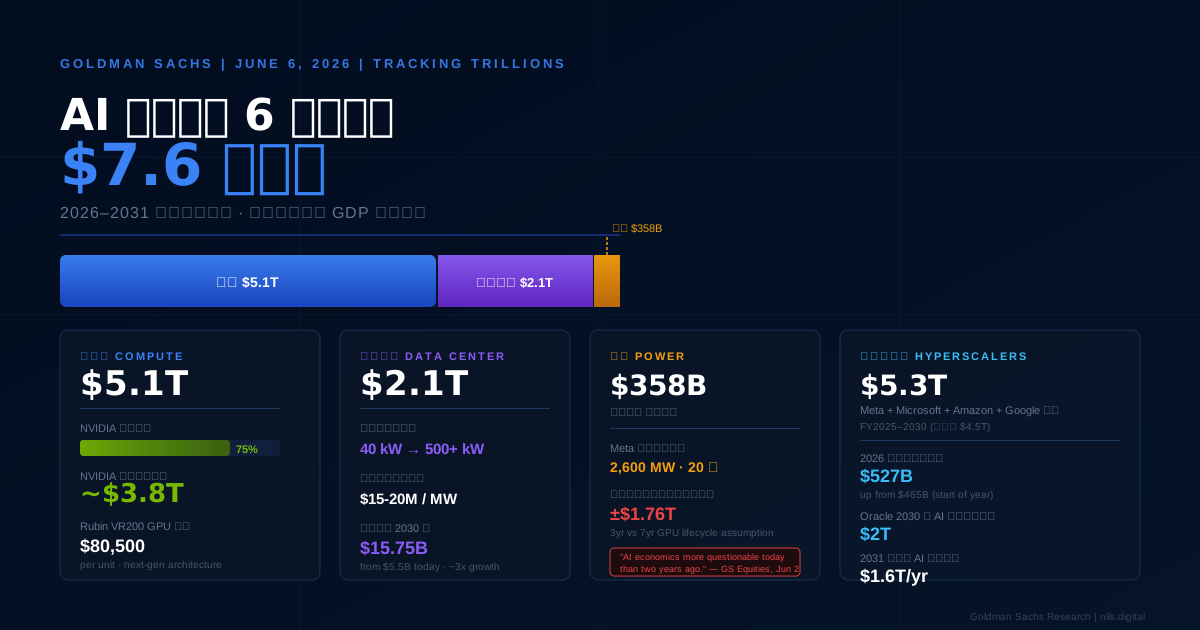
Goldman Sachs projects $7.6 trillion in cumulative AI infrastructure capex through 2031. Nvidia is set to capture 75% of the $5.1 trillion compute layer — but power availability, not capital, is the binding constraint.
At HDC 2026, Huawei debuted HarmonyOS 7 with Agent Framework 2.0, promoting Xiaoyi to a system-level AI agent with 2,100+ system capabilities and a 90%+ task completion rate, signaling the shift to intent-driven mobile computing.
GPTZero's forensic review of KPMG's agentic AI report found 40 of 45 citation titles were fabricated and 89% of citations flawed. UBS, NHS, and Transport for London denied the claims. KPMG pulled the report.
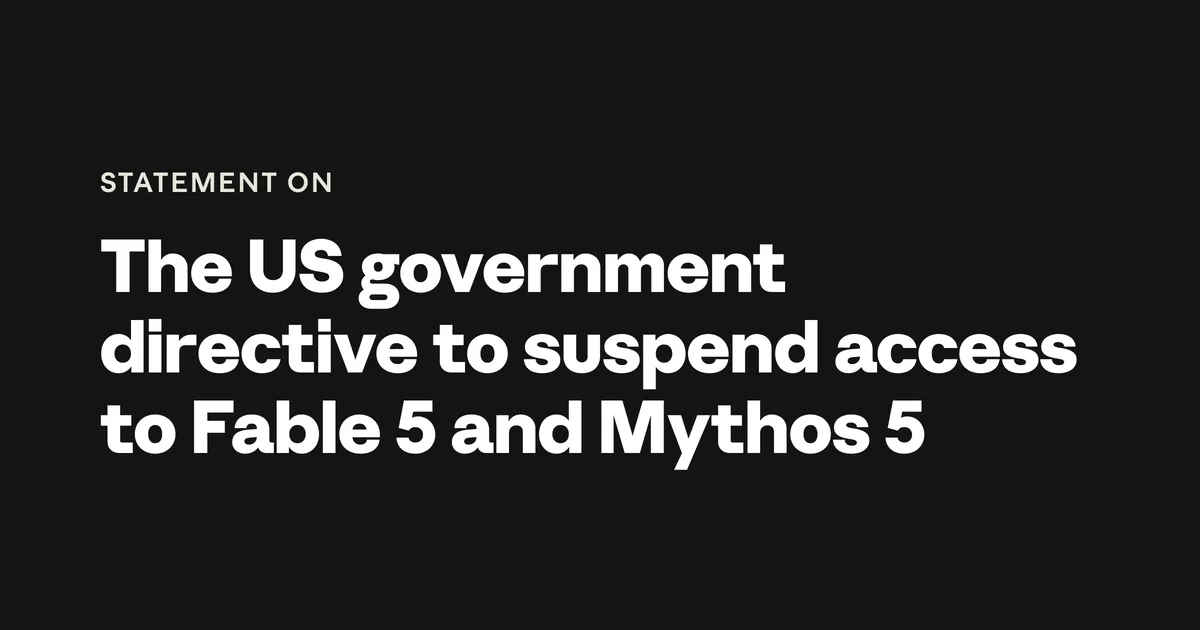
The US Commerce Department ordered Anthropic to suspend its two most capable models, Fable 5 and Mythos 5, citing a narrow jailbreak tied to cybersecurity capabilities. Anthropic complied. Then it pushed back.
For the first time in G7 history, the CEOs of OpenAI, Anthropic, and Google DeepMind will attend the same summit in Évian, France (June 15-17). Behind the gathering: US resistance to multilateral AI agreements, Europe's fight for AI sovereignty, and two AI companies approaching IPOs who need political credibility before listing.
OpenAI announced the acquisition of German startup Ona (formerly Gitpod), integrating persistent cloud sandbox technology into Codex so AI agents can work autonomously for hours or days. This is OpenAI's sixth acquisition in 2026, targeting Anthropic's lead in enterprise autonomous coding.
The Wall Street Journal reported June 11 that OpenAI is weighing significant API token price cuts. The trigger: Anthropic's Claude Code drove explosive growth and the company's first profitable quarter. As AI pricing enters a competitive phase, enterprise buyers are gaining leverage.
Jeff Bezos and Vik Bajaj's Prometheus emerged from stealth on June 11 with a $12 billion Series B at a $41 billion valuation. The goal: build an 'artificial general engineer,' AI that designs jet engines, drug molecules, and semiconductors by bringing LLM-style reasoning to the physical world.
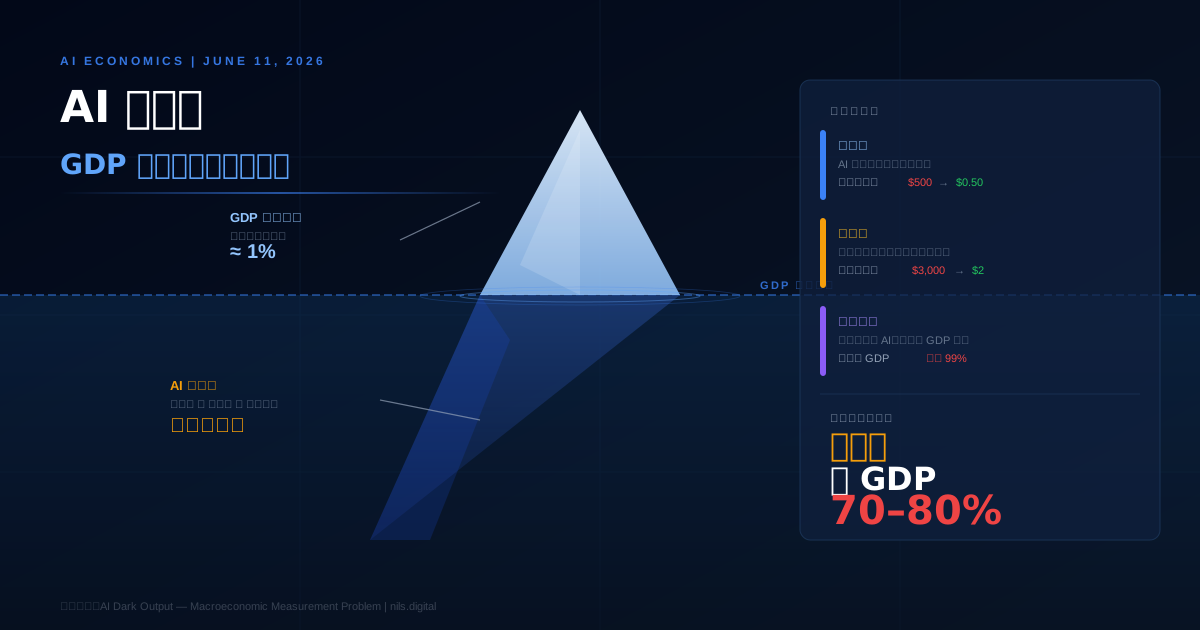
AI is generating enormous real economic value that GDP, CPI, and labor statistics all fail to capture. When the cost of drafting a will collapses from $500 in lawyer fees to $0.50 in token costs, the statistical system reads this as 'declining services output.' If the Fed keeps relying on this broken ruler, monetary policy will navigate in the dark.
Anthropic just made its Mythos-class model publicly available for the first time. Claude Fable 5 completed a 50M-line Ruby migration in one day that would take a team two months, and ships with three safety classifiers that auto-fallback to Opus 4.8.
Google DeepMind open-sourced DiffusionGemma 26B-A4B on June 10, 2026, applying image diffusion techniques to text generation: 15–20 tokens per forward pass, 1000+ tokens/sec on H100, 4× faster than comparable autoregressive models. The tradeoff: lower output quality than standard Gemma 4.