A hypothetical NT$500,000 position in Taiwan shares loses 20%, leaving NT$400,000. If NT$600,000 must be paid in two years, the shortfall is NT$200,000. Calling the position a long-term investment does not change the bill. This lesson tests a practical proposition: an investment can offer the prospect of gains while still being unsuitable for the date on which the money is needed.
Taiwan Stock Investing in 30 Days begins with that constraint. You already know what shares, ETFs and dividends are. The next step is to make investment decisions you can revisit using evidence. Today has one learning objective: write a purpose, amount, deadline and comparison benchmark for one pool of money. We will not select a stock or prescribe anyone’s portfolio weights.
Put a date on the spending need
The US SEC’s investor education website defines an investment horizon as the months or years available to reach a financial goal. It considers horizon alongside risk tolerance when discussing asset allocation. Start with the date of a tuition payment, property payment or retirement withdrawal. A favorable long-term view of a company does not establish when you can afford to withdraw your money.
Consider two hypothetical goals. Each starts with NT$500,000 and aims to reach NT$600,000, without additional contributions or withdrawals. One has a two-year deadline; the other has ten years. The annualized figures below work backward from the goals using constant compound growth. They are not forecasts of Taiwan stock returns.
| Assumption | Two-year goal | Ten-year goal |
|---|---|---|
| Initial capital | NT$500,000 | NT$500,000 |
| Required amount at the deadline | NT$600,000 | NT$600,000 |
| Net contributions during the period | NT$0 | NT$0 |
| Required annual compound return | About 9.54% | About 1.84% |
The formula is: required annual return = (target amount / initial capital)^(1 / years) − 1. For two years, (600,000 / 500,000)^(1 / 2) − 1 is approximately 9.54%. Over ten years, the corresponding figure is approximately 1.84%. All amounts are in New Taiwan dollars. To isolate the effect of the deadline, this illustration excludes transaction costs, taxes and inflation, and assumes the same return every year. Actual prices fluctuate; the formula cannot make returns arrive on schedule.
A higher required return for the two-year goal does not establish that higher-risk shares are an appropriate solution. If the capacity for loss is low, the unresolved choices may instead involve saving more, changing the target amount or extending the deadline where the purpose allows. Record the gap between what the goal requires and what markets might deliver. An apparently promising stock cannot make that gap disappear.
Waiting through a loss requires financial room
Apply one stress scenario to the two-year example. Shortly before payment, assume the entire position is 20% below its initial NT$500,000 value, with no dividends received and no other contributions. Its value is 500,000 × (1 − 20%) = NT$400,000. The payment shortfall is NT$200,000. The 20% decline is an explicit teaching assumption, not a maximum loss, expected Taiwan market decline or probability estimate.
If that shortfall prevents an essential payment, being emotionally comfortable with an unrealized loss is not enough. CFA Institute’s public learning material distinguishes willingness to accept risk from the financial ability to do so. Willingness concerns how you respond to losses. Capacity depends on available resources, income and obligations that must still be met.
Singapore’s MoneySense education also starts with the amount and date of a goal and asks whether investment losses could disrupt other commitments. Only that planning principle is used here. Singapore-specific products, tax arrangements and product suggestions are not being transferred to Taiwan.
A longer holding period changes how much time you have to wait through price fluctuations. It does not guarantee that a particular share or the market will recover its purchase price by a chosen date. An income interruption or urgent family expense can also shorten a ten-year horizon. Write down what could bring the spending date forward.
Keep the goal test and market comparison separate
The amount available to pay the NT$600,000 bill answers whether the financial goal was met. A market benchmark answers a different question: how the investment performed relative to a preselected market exposure. Beating the market can coexist with an unpaid bill; lagging the market can coexist with meeting the original spending goal. Record both outcomes.
For money mainly exposed to Taiwan-listed shares, the Taiwan Stock Exchange’s TAIEX is one benchmark to investigate. Its scope will not suit every portfolio. Holdings of TPEx shares, overseas assets or substantial cash can create different exposures. Choose the reference before observing the result, rather than searching afterward for an easy comparison.
Check which index version you use. The TWSE methodology distinguishes price and total-return indices; the total-return version adjusts for cash dividends. Comparing a portfolio return that includes dividends with a price-only index creates an inconsistent comparison. Record the benchmark’s exact name, official source, start and end dates, currency, and dividend and cost treatment. An index is not itself a directly purchasable investment with no implementation costs.
Today, establishing the method matters more than declaring a winner. Later contributions and withdrawals also affect return calculations. Added principal must not be counted as investment profit; later lessons will address cash flows.
Today’s one-page record
Choose one pool of money you are considering investing. You do not need to document your entire household’s finances. Complete the following as one exercise. It is a private planning record, not a prescribed allocation or information to send to strangers.
| Field | What to record |
|---|---|
| Purpose and amount | The expense and amount in NT dollars; whether the target is a fixed nominal sum or must preserve purchasing power |
| Date and flexibility | Latest spending date, whether it can move, and what might require earlier access |
| Funding | Capital available now, known future contributions and dates, and money that must remain reserved for other needs |
| Loss test | One explicitly hypothetical decline, the money lost and payment shortfall; do not treat it as a worst-case bound |
| Comparison method | An appropriate market benchmark and source; matching dates and currency; dividend and cost treatment |
| Review conditions | Recheck when the purpose, income or payment date changes, instead of changing the goal merely because prices moved for a day |
Then apply the two-year worked example once. If the payment gap can only be filled by assuming prices will recover in time, the plan still lacks a workable funding arrangement. Make that gap explicit before moving to stock selection and valuation. Subsequent research will then have clear conditions under which it is useful.
This is general investment education. The figures are hypothetical, not return forecasts, security recommendations or personalized position advice. Sources checked on 27 October 2026.
Sources:
- TWSE: TAIEX methodology, section 4
- SEC Investor.gov: Asset Allocation and Diversification
- CFA Institute: Basics of Portfolio Planning and Construction, public learning material
- MoneySense: Putting together an investment portfolio
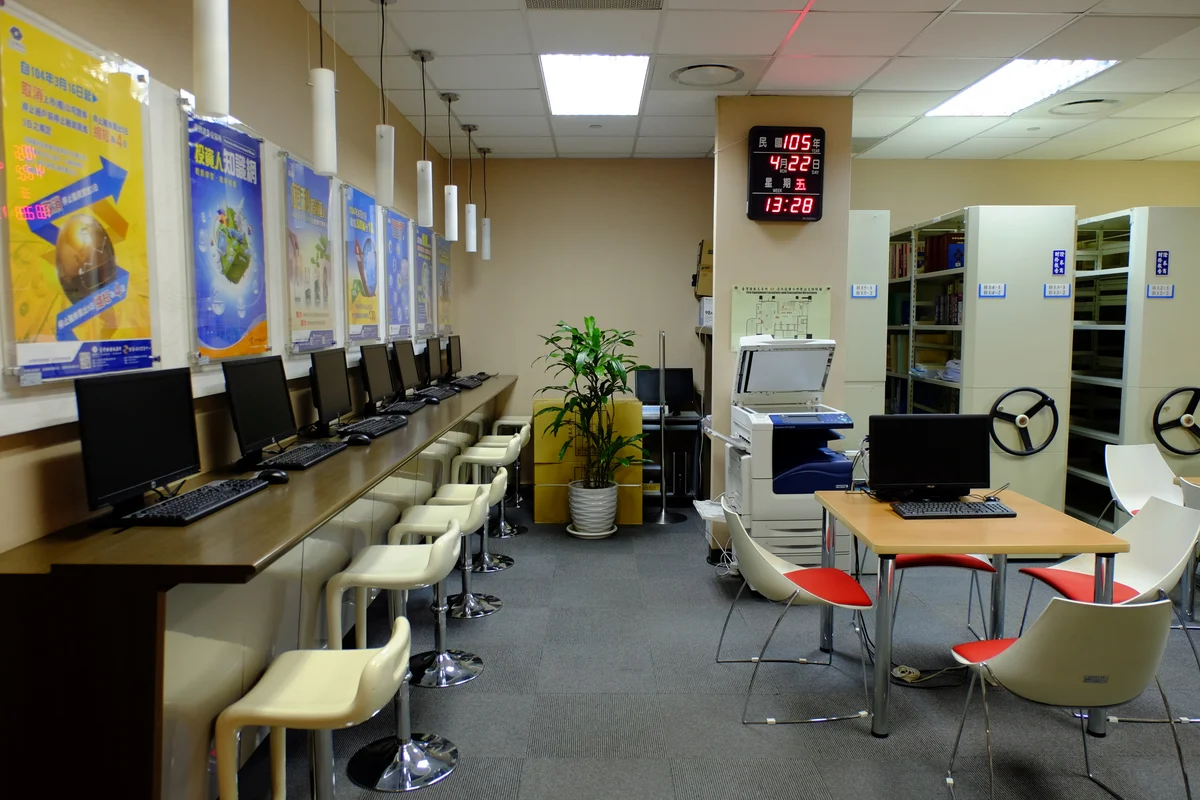
The cover is an archival photograph of the TWSE Investors Reference Room, taken on 22 April 2016. It does not show current access arrangements or the market on the publication date. 玄史生 / Wikimedia Commons, CC0 1.0. Local versions were resized and converted to WebP; the share image was additionally cropped.
