SK Hynix $29B Nasdaq ADR IPO: The AI Premium Moment for HBM Chips
TL;DR
SK Hynix filed its ADR registration with Korea FSS on June 24, targeting a July 10 Nasdaq debut and raising up to $29B for Yongin fab expansion. Not a fundraising move. A repricing play. KOSPI P/E of 8x versus Micron at 15x explains everything.
SK Hynix trades at roughly 8x forward P/E on the KOSPI. Micron trades at roughly 15x on Nasdaq. Both sell HBM chips. SK Hynix has twice the market share. The gap is either a structural discount Korean markets apply to tech stocks, or evidence that investors genuinely view the two companies differently. Today’s ADR filing launches a live experiment. If you track the HBM supply chain professionally, the ADR premium on July 10 will be a clean data point worth recording. Curious to hear what you observe at open.
June 24: One Filing, One Valuation Dispute
SK Hynix submitted its American Depositary Receipt registration statement to South Korea’s Financial Supervisory Service on June 24, formally initiating a Nasdaq listing. Trading is tentatively set to begin July 10. The ADR was priced at 255,500 won per share, approximately $166. The offering targets up to 45.45 trillion won, roughly $29 billion, making it the largest overseas share issuance in South Korean corporate history.
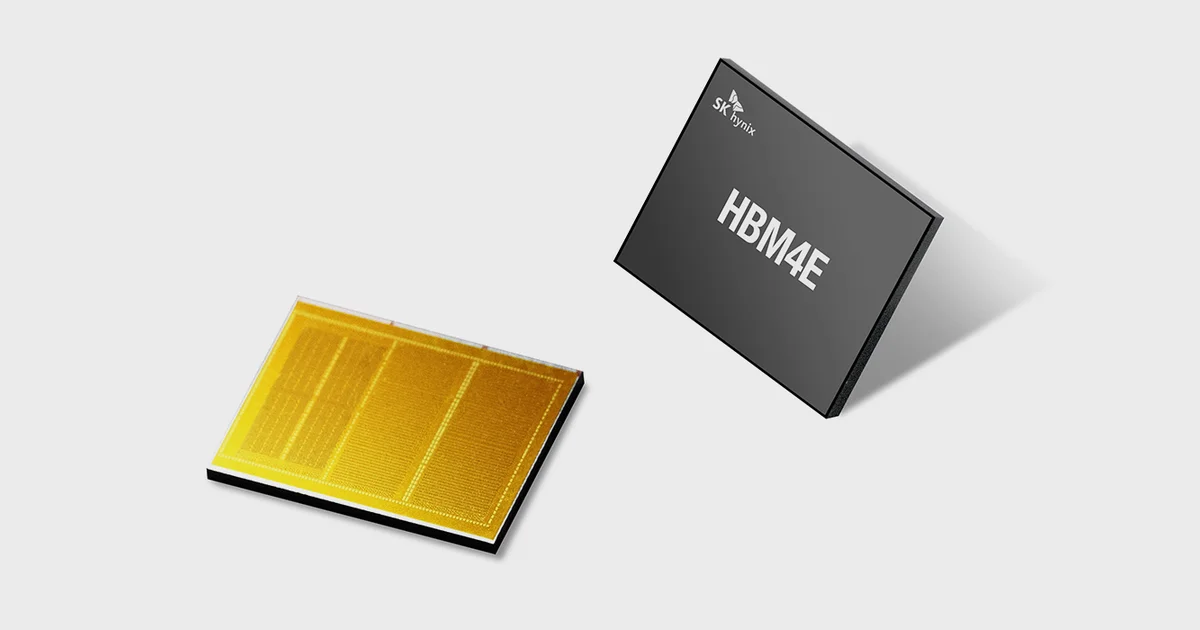
SK Hynix HBM chips account for over 50% of global high-bandwidth memory supply and serve as the primary memory provider for Nvidia’s H100 and H200 GPU lines. On June 17, the company shipped HBM4E 12-layer samples to key customers.
The same day the ADR filing was announced, SK Hynix surpassed Samsung Electronics in KOSPI market capitalization for the first time in over 25 years, claiming the top spot among South Korean listed companies. Korean shares rose nearly 6% intraday before settling +0.98% at close, then added another 5.5% in after-hours trading.
What the Numbers Actually Mean
Twenty-nine billion dollars sounds enormous. Place it in context. SK Hynix market cap is approximately $1.3 trillion. A $29 billion raise represents roughly 2.2% dilution. Proceeds go 100% to the Yongin semiconductor cluster, a 31 trillion won ($21 billion) greenfield fab campus south of Seoul.
Semiconductor fabrication facilities take four years from groundbreaking to production volume. Yongin will not ship chips before 2028 at the earliest. The capital raised today funds assets that generate cash flow in a different economic cycle. This is not about needing money. SK Hynix posted nearly $36 billion in revenue in Q1 2026 alone, per CNBC reporting on the Q1 earnings.
The actual move is valuation arbitrage. At Micron’s 15x multiple, SK Hynix would trade at roughly $2.4 trillion in market cap, compared to its current $1.3 trillion. That $1.1 trillion gap is what the Nasdaq listing is designed to close. Index funds tracking Micron as the only US-listed HBM proxy will likely start acquiring SK Hynix ADRs, applying upward pressure without any change in the underlying business.
A note of caution on the HBM4E narrative. Shipping 12-layer stacking samples to a customer and shipping production volume are different milestones. Yield on 12-layer HBM4E is meaningfully harder than the 8-layer predecessor. The SK Hynix newsroom describes June 17 shipments as samples to “major customers,” with no production timeline disclosed.
If the ADR repricing thesis holds, expect to see within three to six months: Samsung accelerating its own overseas listing discussions, institutional reallocation from Micron to SK Hynix ADRs, and SK Hynix providing a concrete HBM4E production ramp timeline to justify the premium.
The Metrics Worth Watching
ADR premium at July 10 open. If the effective forward P/E implied by ADR trading exceeds 12x, US investors are accepting the “AI infrastructure memory” framing rather than treating SK Hynix as a commodity cycle play. Below 10x suggests the discount persists.
HBM4E production ramp confirmation. Customer validation cycles after sample delivery typically run three to six months. If Nvidia’s Blackwell Ultra series enters volume production in H2 2026, SK Hynix needs parallel HBM4E production volume to match. The Q4 earnings report will be the hard test.
Samsung’s response timeline. The valuation discount problem for Samsung is structurally identical to what SK Hynix just resolved. A successful ADR repricing will materially increase pressure on Samsung to accelerate its own US market presence.
If this was useful, subscribe to the newsletter for weekly AI PM insights and GenAI case studies.
Further Reading
Related Articles
SK Hynix Surges 13% on Nasdaq Debut: Inside the $26.5B AI Memory Bet
SK Hynix debuted on Nasdaq July 10, raising $26.5B in the largest-ever foreign ADR offering and popping 13% to a $1.2 trillion market cap. Leveraged ETFs tracking the stock launch today. Structural shift, or cycle-top euphoria?
AI Bubble Fears Trigger Second Circuit Breaker in Korea in Three Days
South Korea triggered a sell-side circuit breaker twice in three trading days, with Samsung and SK Hynix both falling over 7% again today. The real trigger was Micron getting hit by Chinese DRAM competition, not AI data center demand. Here is the math.