SK Hynix Surges 13% on Nasdaq Debut: Inside the $26.5B AI Memory Bet
TL;DR
SK Hynix debuted on Nasdaq July 10, raising $26.5B in the largest-ever foreign ADR offering and popping 13% to a $1.2 trillion market cap. Leveraged ETFs tracking the stock launch today. Structural shift, or cycle-top euphoria?
I have a testable hypothesis on this one: SK Hynix’s 13% first-day pop is a soft number, not a hot one, and the tell is in the pricing mechanics, not the headline. The offering was trimmed from $29.65B to $26.5B before it priced, and the stock had already dropped 3.4% in Seoul the day before the debut. If you track HBM spot pricing or have access to weekly DRAM contract data, I’d like to see whether that softness shows up there too before the next earnings cycle. Here’s the case.
What happened
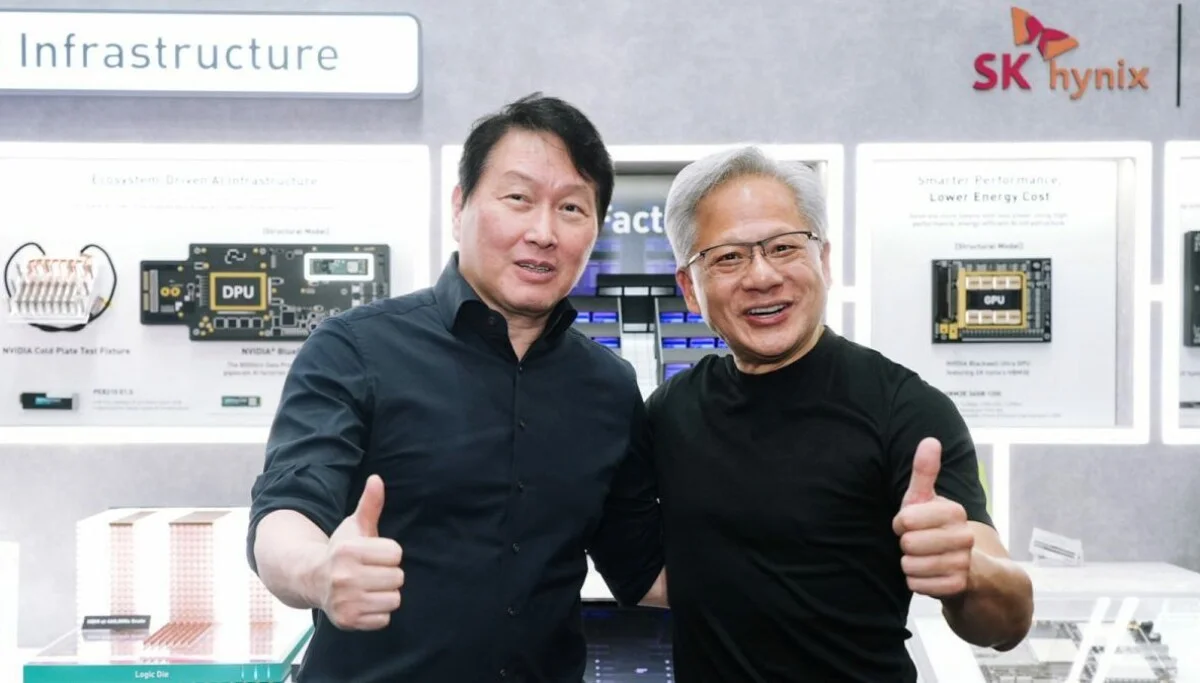
SK Hynix rang the opening bell at the Nasdaq MarketSite on July 10, with Chairman Chey Tae-won and CEO Kwak Noh-Jung on hand. The ADRs priced at $149 each, raising $26.5 billion — the largest-ever US equity offering by a foreign company, and the second-largest stock sale on record globally after SpaceX’s $85.7 billion raise earlier this year. Shares opened at $170, drifted through the session, and closed at $168.01, up 13% on day one, pushing the company’s market cap past $1.2 trillion.
Chey told CNBC that “the demand is enormous, exponentially,” pointing to AI agents and robotics as future drivers of memory chip consumption, and said he saw no signs of demand shrinking. The use of proceeds is narrow and specific: expanding the Yongin semiconductor cluster in South Korea and buying ASML extreme ultraviolet lithography scanners — equipment that remains the tightest bottleneck in advanced chip manufacturing, with order backlogs often running a year or more. The underwriting syndicate included BofA Securities, Citigroup, Goldman Sachs, and J.P. Morgan, alongside cornerstone investors like Baillie Gifford and Coatue-managed funds, who together indicated interest in roughly $7 billion of the offering.
Today, the ticker formally converts from the debut symbol SKHYV to the permanent SKHY, and asset manager GraniteShares is launching two leveraged ETFs tracking it on the same day — SKUU for 2x long exposure, SKDD for 2x short. Leveraged products arriving three trading days after a debut is fast, faster than most large-cap listings see.
What the numbers actually say
SK Hynix’s own disclosure puts its share of the high-bandwidth memory market above 50%, making it the primary memory supplier for Nvidia’s H100, H200, and Blackwell-generation GPUs. That figure is a company-reported snapshot through Q4 2025, not third-party audited — fine as evidence of a current moat, weaker as a forecast of where share goes from here.
Scale the $26.5 billion against the market it’s meant to serve. TrendForce’s Yole Group estimates global HBM revenue climbing from $35 billion in 2025 to roughly $60 billion in 2026, a jump of nearly 70%. This single raise equals about 44% of the entire projected 2026 global HBM market. One company’s ADR offering just absorbed nearly half a year’s worth of an entire product category’s revenue.
The rhythm of the price move matters more than the headline number. SK Hynix shares were already up roughly 260% year-to-date in Seoul before the Nasdaq debut, so the 13% first-day pop sits on top of a base that had already tripled. The 3.4% pre-pricing drop in Korea, plus the $3.15 billion trim in offering size, both point the same direction: demand was strong but not bottomless, which sits awkwardly next to Chey’s “exponential” framing.
The historical ledger is worth pulling up too. SK Hynix posted its first quarterly operating loss in a decade in Q4 2022 — 1.7 trillion won — and the full-year 2023 operating loss widened to 7.73 trillion won, a -24% margin, as memory spot prices collapsed and the company survived by cutting capex. Less than three years separate that trough from today’s $1.2 trillion valuation. Memory is a cyclical business; what’s changed is the narrative wrapped around it, with “AI infrastructure” repackaging a commodity cycle stock as a structural growth story. The engineering moat is real — HBM’s through-silicon-via stacking yields are genuinely hard to replicate, and Samsung and Micron need time to close the gap — but that moat slows competitors, not the price cycle itself.
Metrics worth watching next
Whether SKHY gets added to the Philadelphia Semiconductor Index is the first thing to track — inclusion forces passive fund buying and appears to be the re-rating target the underwriters were quietly pricing toward. DRAM and HBM spot pricing over the next two quarters is the second: if the pace of price increases flattens, that signals the supercycle is shifting from supply-constrained to supply-caught-up, and the stock’s narrative loosens with it. Volume and flow in SKUU and SKDD will show how much of this move is long-term capital versus short-term leveraged speculation. HBM4E yield data out of the Yongin fab needs watching too — if 12-layer stacking yield numbers stay unpublished, that’s a tell the production ramp is running behind schedule, which would hit actual shipment volumes in the second half of 2026. And keep an eye on whether Samsung accelerates its own overseas listing plans; both companies trade at a KOSPI discount, and a successful SK Hynix re-rating raises the pressure on Samsung to follow.
If this was useful, subscribe to the newsletter for weekly AI PM insights and GenAI case studies.
Sources: CNBC, Bloomberg, Yahoo Finance
Related reading:
Related Articles
AI Bubble Fears Trigger Second Circuit Breaker in Korea in Three Days
South Korea triggered a sell-side circuit breaker twice in three trading days, with Samsung and SK Hynix both falling over 7% again today. The real trigger was Micron getting hit by Chinese DRAM competition, not AI data center demand. Here is the math.
Samsung Profit Jumps 19-Fold as AI Memory Demand Ignites a Chip Supercycle
Samsung Electronics posted preliminary Q2 operating profit of 89.4 trillion won on July 7, a 19-fold jump and an all-time quarterly record, driven by rising memory chip prices. Shares still dropped over 6% on the news. What is the market actually worried about?